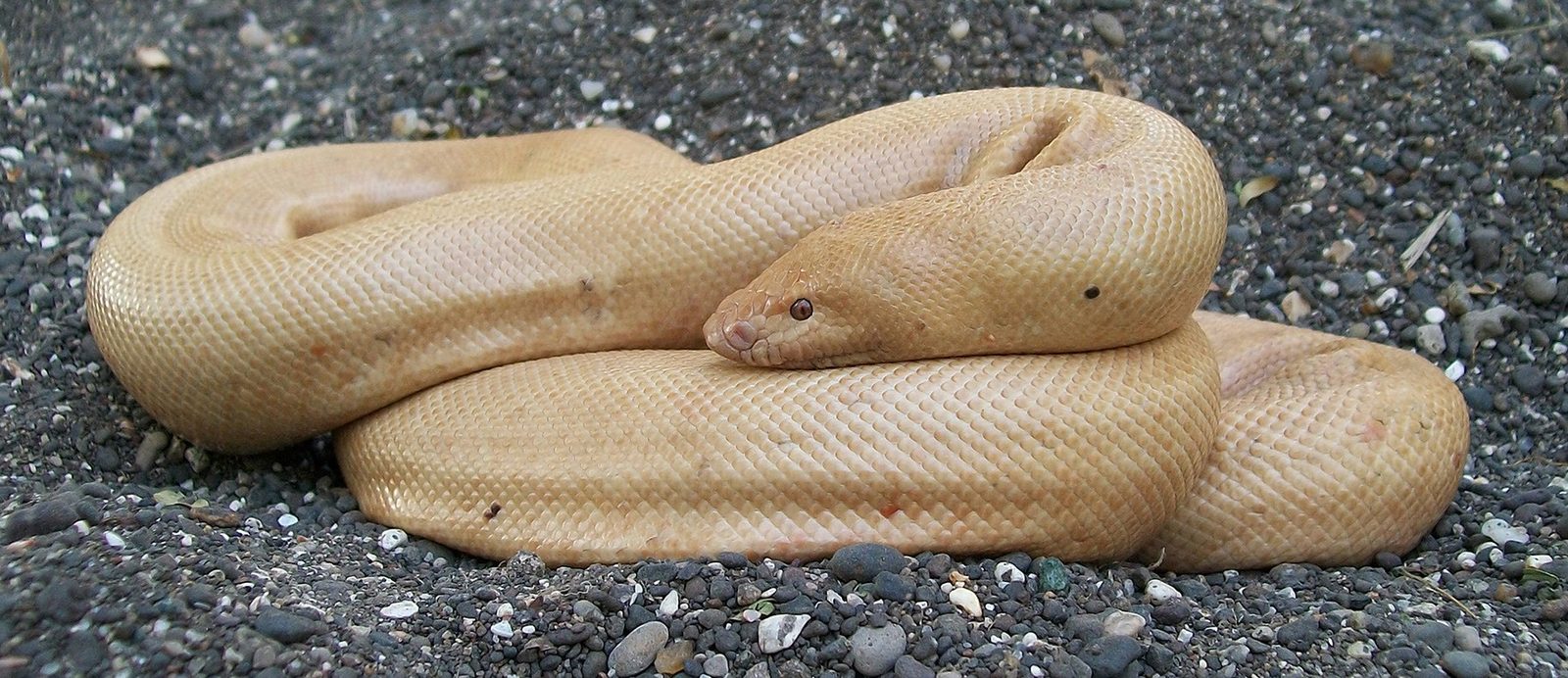
The Snake Called Double Engine
Photo: Dikansh S. Parmar, from Parmar & Kaiser 2022, Herpetology Notes
On the afternoon of 9 April 2012, at a quarter past three, my colleague Dikansh Parmar got a tip. A "black magic" practitioner was about to perform at a gathering in Gujarat, in western India, and the performance would use a live snake.
Dikansh confirmed the location, rounded up local volunteers and officials of the Gujarat State Forest Department, and went straight there for a raid. He arrived just after the show had ended. After searching the performer's belongings, he found the snake, and the officers confiscated it.
It was a female Red Sand Boa, Eryx johnii, about 1.25 metres long and weighing roughly two kilograms. She was moving restlessly, as if in pain. Along her body were 22 knife wounds, some as long as six centimetres. Around the middle of her body was a swelling from hammer blows. The veterinarians who treated her confirmed a large blood-filled bruise, perhaps from yet another performance shortly before.
The ritual, as it turned out, involved chanting by the performer, knife cuts and hammer blows to the snake.
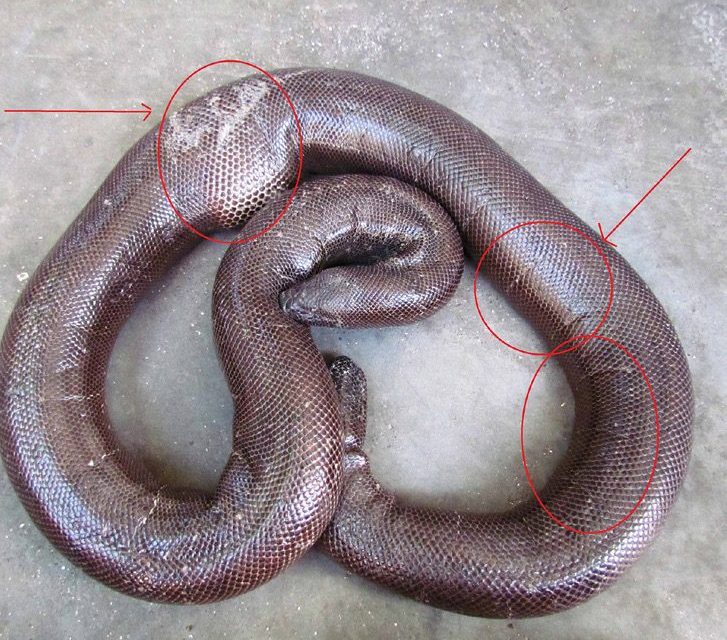
A snake with two heads
The Red Sand Boa is one of the least threatening snakes you could meet. It is not venomous, it is placid, and it is a night-active burrower in sandy soil. Young ones are red with black bands; adults are usually a plain, dark reddish brown. It is a stout snake whose head is hardly distinct from its body, and its short, blunt tail looks a lot like a second head.
That tail is the root of its trouble. People call it the "two-headed snake," and in the illegal wildlife trade in Gujarat it even has a code name: "double engine," or simply "DE."
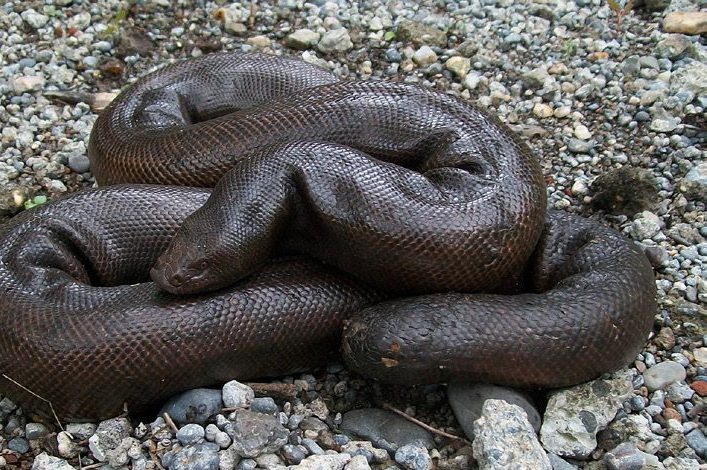
Around this odd-looking animal has grown a thicket of superstition. When Dikansh and I went through the reports, we found claims that eating the snake is an aphrodisiac or cures leprosy, AIDS, asthma and joint pain; that owning one brings good luck or destroys your enemies; that drinking its blood brings wealth; that its movements can lead you to hidden treasure; and that its vertebrae can make a person invisible. None of it is true.
A price on its head
The Red Sand Boa has been protected under India's Wildlife Protection Act since 1972. That has not stopped the trade. In the reports we found, black-market prices had risen from around US$100 to US$5,000 and, over the decade to 2021, to more than US$6,000, depending on the snake's size. Heavier is better for the buyers, and two kilograms or more seems to be the preferred weight for black magic. So traders force-feed the snakes, pushing steel or lead beads, ball bearings, chicken and mutton into their mouths with a rod to make them heavier.
We searched newspapers and online news in India for reports of sand boa smuggling. Between 2009 and 2021 we found 63 reports from states across the country, involving 165 snakes. Where both numbers were given, 87 smuggled snakes had led to the arrest of 153 people. The true numbers are surely far higher, likely in the thousands of snakes, because most cases never reach the news.
The human cost is real, too. The trade has been tied to extortion, brawls, kidnapping and even murder. In 2019, in Nepa village in Gujarat's Anand District, a farmer asked an inflated price for two sand boas; the buyers beat him and ran off with the snakes. Sand boas have even been stolen from zoos.
During 2011 and 2012, Dikansh was also present when police and forest officers seized several sand boas in Surat District. One was a rare leucistic animal, pale cream with dark eyes because it lacks most of its skin pigment, being smuggled from Rajasthan to Maharashtra when the smugglers were caught in Gujarat.
Smugglers in the forest
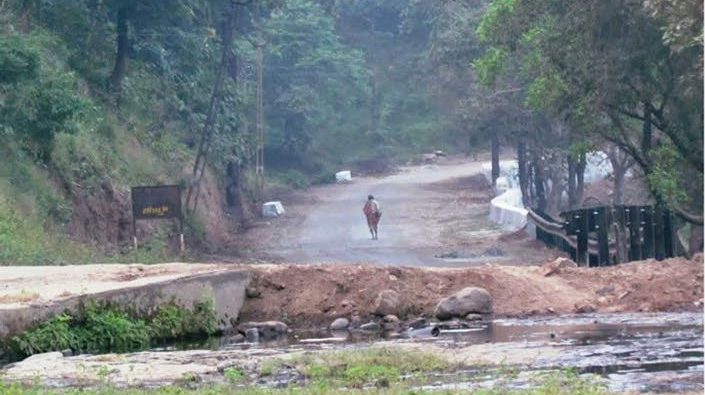
Sand boas are not the only snakes being taken. In the forests of the Dangs, in the far south of Gujarat, Dikansh surveyed two forest roads on 13 nights between January 2022 and May 2025, searching for the Bamboo Pitviper, Trimeresurus gramineus, a vivid green, venomous snake that reaches the northern edge of its range there.
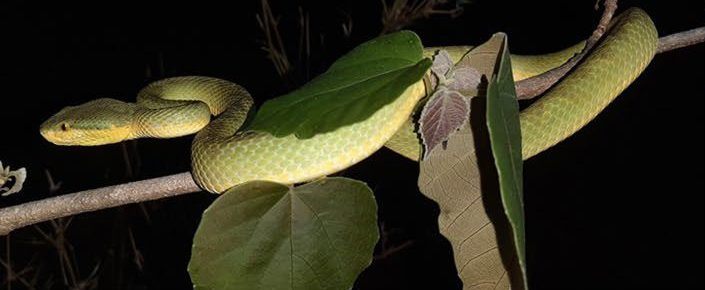
He recorded 44 of them, always at night, most perched three to seven metres up on roots and shrubs sticking out of the steep, eroding banks where the roads had been cut into the hillside. When six snakes were gently moved away from their perches, all six were back within three days.
On 5 May 2023, he met other people on those slopes: men with flashlights, snake bags, snake hooks, knives, cigarette lighters and a jeep. They claimed to have permission from the forest department, denied doing anything illegal, and fled when forest officers were called. Their licence plate and their own social media posts, which showed protected species in captivity, revealed that they had been trafficking snakes from as far away as Northeast India, Maharashtra and Goa.
Why it matters
Trafficking is only part of what these snakes face. Around Surat, where Red Sand Boas were once common, they have become rare within the city as roads, tall buildings and malls have replaced the sandy ground they need. Where smuggling is heavy, sightings of sand boas have reportedly dropped by as much as 80 percent. The species is now listed as Near Threatened, and its numbers are falling.
Laws and raids matter, and we are grateful for the outstanding work of the forest department's enforcement teams. But the demand for these snakes comes from beliefs, and beliefs have to be answered with information. That means spreading accurate information on social media and in the news, and explaining why these snakes matter in their ecosystems.
"Educating people that these snakes have no medicinal value or supernatural powers." — Parmar & Kaiser 2022
A snake with a tail that looks like a head is a small wonder of nature. It deserves to be seen that way, not cut, beaten and sold.
The papers
- (2022) Trafficking and “black magic” in Gujarat State, India: superstitious beliefs engender a troubled future for Red Sand Boas, Eryx johnii (Serpentes: Boidae) Herpetology Notes 15: 671–677
- (2026) Hanging in the balance: an ecological and conservation assessment reveals growing threats to the Bamboo Pitviper, Trimeresurus (Craspedocephalus) gramineus (Shaw, 1802), in the Dangs Forest of Gujarat, India Discover Ecology 2: 9