How Islands Make Species
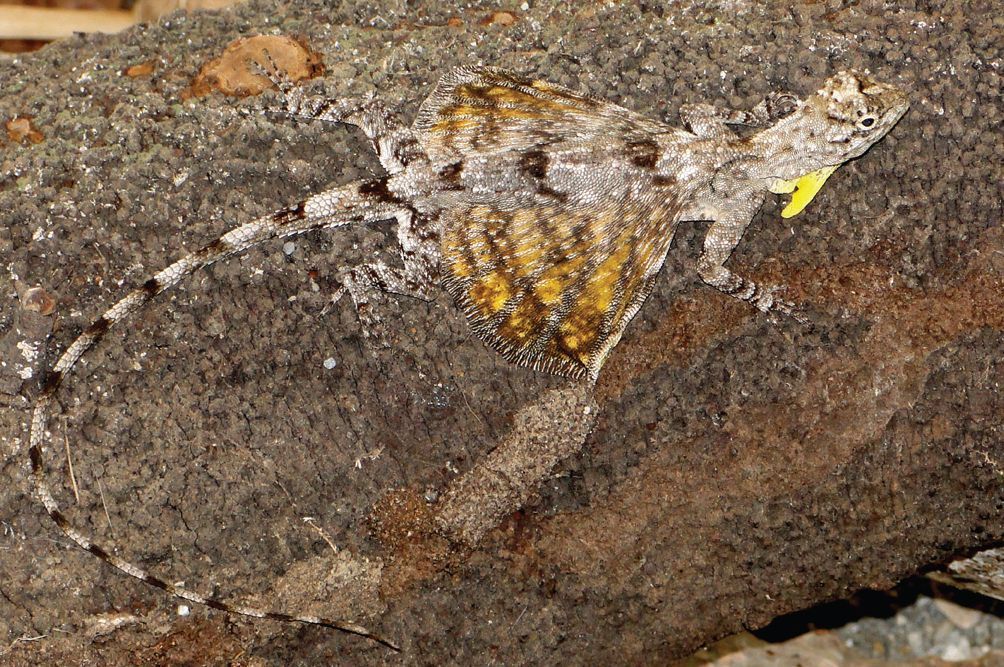
Photo: Hinrich Kaiser, CC BY 3.0, via Wikimedia Commons (from Kaiser et al. 2011, ZooKeys)
Between the islands of Lembata and Pantar, in eastern Indonesia, lies the Alor Strait, just 15 km wide. For a flying lizard that spends its life gliding from tree to tree, it looks like the easiest crossing in the archipelago.
The lizards never made it. When my colleagues and I read their family history in their DNA, we found that flying lizards reached Pantar the long way round: through Sumba, Timor and on to Wetar, then back west, with at least four or five crossings of open sea. The short hop was never taken.
That result sums up what we have learned about the Lesser Sunda Islands. Nothing there happens in a straight line, and the islands are much better at making new species than anyone expected.
A chain of islands between two worlds
The Lesser Sundas run east from Bali through Lombok, Sumbawa, Flores and Alor to Timor. They sit in Wallacea, the zone of deep-water islands between Asia and Australia named after Alfred Russel Wallace. Wallace himself noticed that neighbouring islands here can hold strikingly different animals.
The islands also differ in age and origin. The volcanic chain from Lombok to Lembata has been above water for up to about 11 million years. Pantar, Alor and Wetar are younger volcanoes, about 5 million years old. Timor and Rote are pieces of seafloor pushed up by the collision with Australia, and Rote has been dry land for less than a million years. Sumba is an old fragment of continent lifted from the sea.
Between the islands flows the Indonesian Throughflow, which carries water from the Pacific into the Indian Ocean and is one of the largest movements of water on the planet. Any animal reaching a new island here had to cross a real sea: on floating vegetation, perhaps, or by sheer luck.
Flying lizards
Flying lizards, genus Draco, were among the animals we photographed during our surveys of Timor-Leste. They are small, tree-dwelling ant-eaters, well camouflaged against bark. Males flash a bright throat flag and spread "wings" of skin supported by their ribs, which they use both for gliding and for display.
Two species were recognised in the Lesser Sundas. Sean Reilly, Jimmy McGuire and their team at the University of California, Berkeley, with Indonesian colleagues and me, sequenced DNA from hundreds of lizards sampled across every major island. The genetic data pointed to 9 to 11 deeply separated lineages, or family lines, and probably 9 or 10 species. Flying lizards first arrived in the islands roughly 5.5 to 7.5 million years ago, and most crossings between islands happened 1 to 3 million years ago.
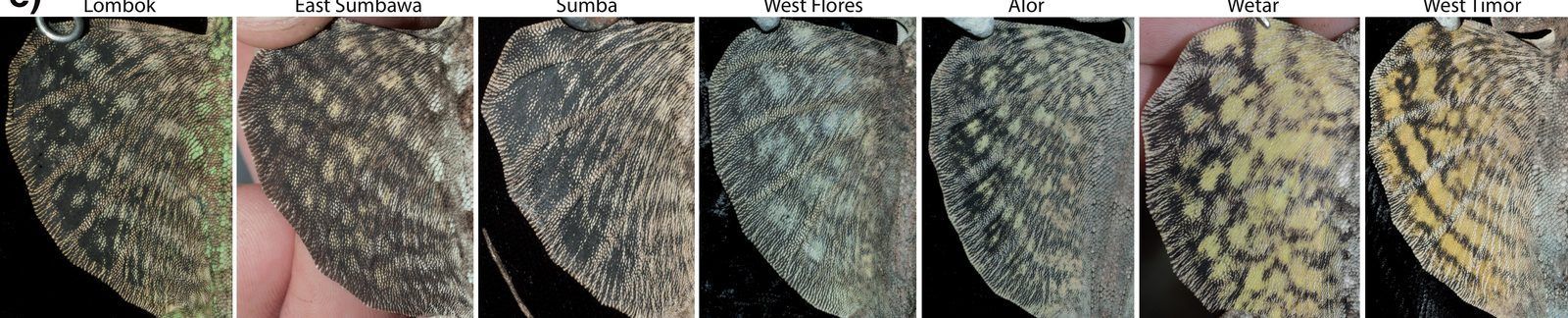
Some of the boundaries between species do not even follow the coastlines. Some run across the middle of large islands. Our explanation is that these islands were once split into smaller islands that later joined together, bringing long-separated lizards back into contact.
The same story, again and again
What makes this work convincing is that other animals tell a similar story.
Forest skinks, genus Sphenomorphus, are small brown lizards of the leaf litter. We screened 245 of them and then read over a thousand genes from 104. We found at least 11 species in the region, nine of them never described. They started out in the western islands and used Sumba as a springboard into the eastern arcs. Three pairs of these lineages now live side by side without interbreeding, which is strong evidence that they are separate species. The skinks also suggest that Sumbawa, Flores and Sumba were each formed from older islands that merged.
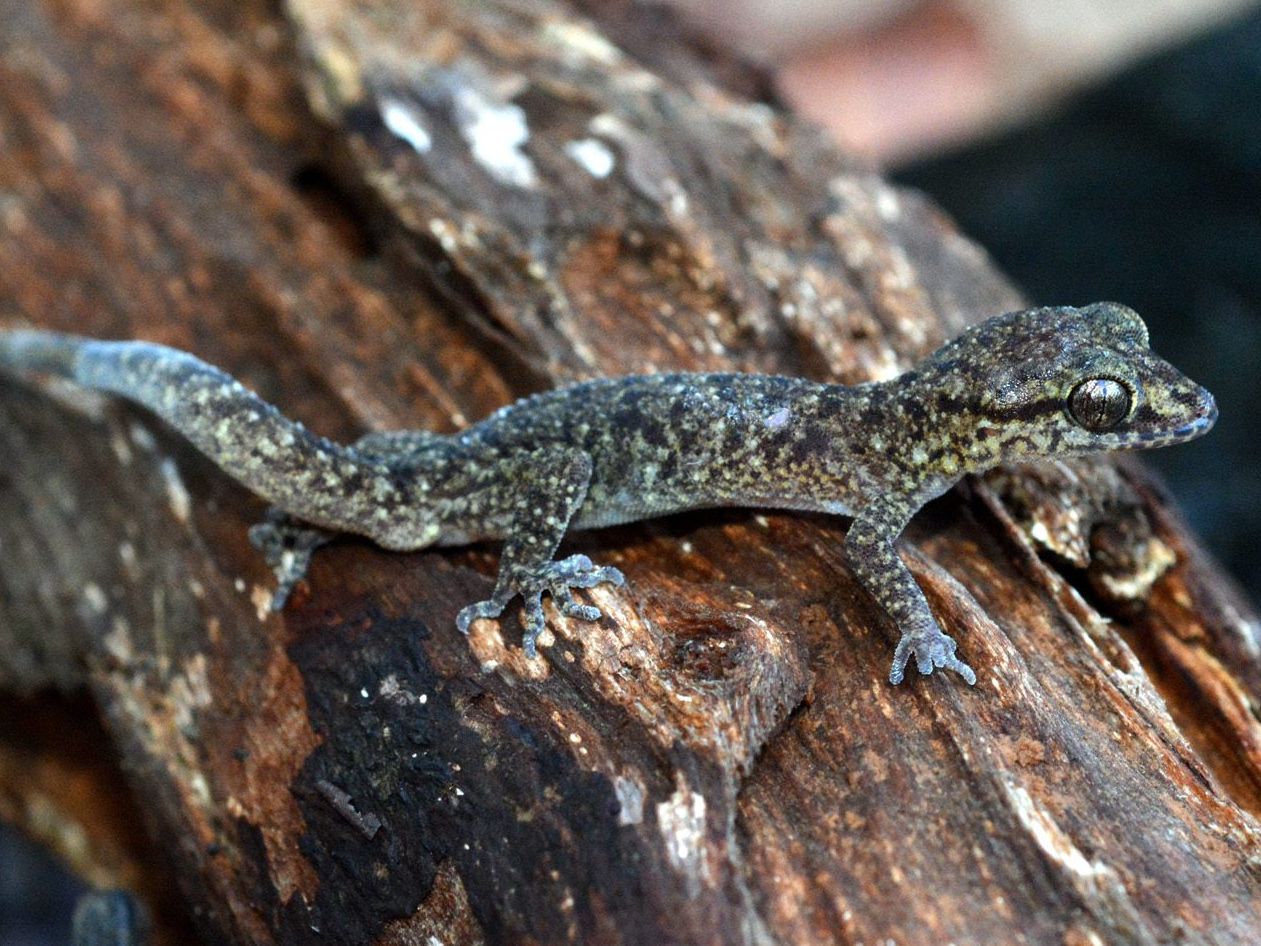
The bent-toed geckos, genus Cyrtodactylus, took us furthest. Only 8 species were named from southern Wallacea, but the genome data suggest as many as 25. They arrived from Sulawesi at least three separate times, between 6 and 14 million years ago. One group spread over thousands of kilometres, including one leap of more than 3,500 km. We also noticed that the big-bodied gecko groups never seem to share an island with each other, while the small-bodied group can live alongside either.
One of those geckos has a story of its own. In 2015, two hundred years after Mount Tambora on Sumbawa blew off its top in the largest volcanic eruption in recorded history, an Indonesian expedition surveyed its slopes. Awal Riyanto and Mulyadi found a new bent-toed gecko along the Oi Marai River. We described it together in 2017 as Cyrtodactylus tambora, a name that also commemorates the eruption, whose effects on the world's climate brought Europe a "year without a summer".
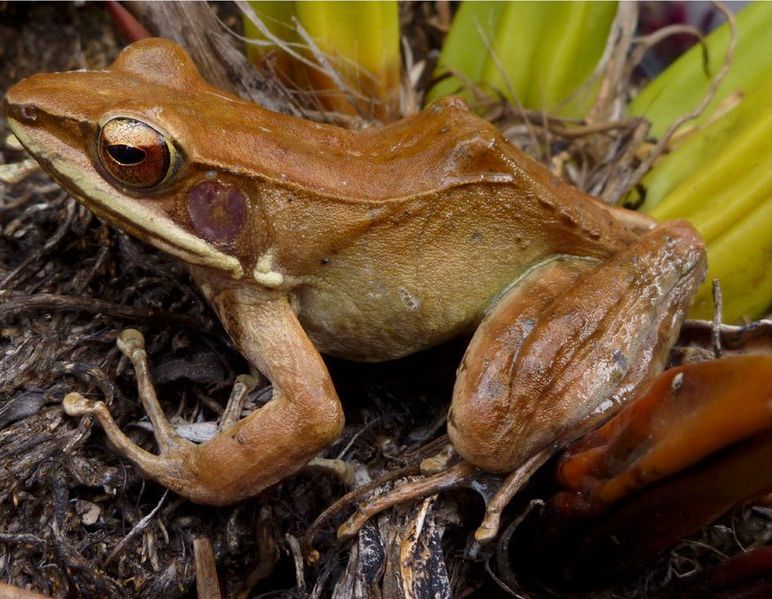
Even frogs, which generally cannot tolerate sea water, made the crossings. Our DNA work on the Lesser Sunda frogs Hylarana florensis and H. elberti showed they are an early branch of a frog group otherwise found in New Guinea and Australia. The Lombok and Flores frogs may be different species, and so may those from Sumba, Timor and Wetar. The islands may even have served as a stepping stone for frogs heading to Australia.
Against the current
The most recent study in this series looked at the emerald tree skink, Lamprolepis smaragdina, a bright green lizard that lives on tree trunks from Indonesia far into the Pacific. Its Lesser Sunda populations split from a relative on Peleng Island near Sulawesi only about 1.25 million years ago, and spread through the chain in the last million years.
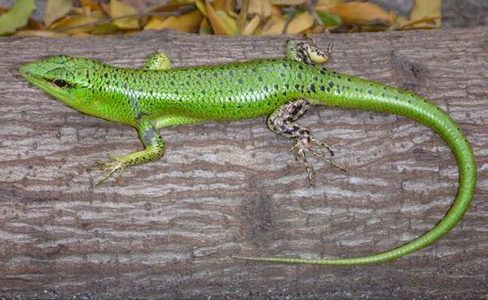
We expected the ocean currents to explain their route. They did not. Only about a third of the crossings went with today's main currents; the rest went across or even against them. Perhaps the currents shifted as the islands moved and grew, or perhaps winds pushed the floating debris the skinks rode on. Either way, once they arrived, each island population became isolated. Even islands that were joined by land during the ice ages show almost no exchange of genes.
"Species formation in this system is driven by overwater dispersal and subsequent isolation." — Reilly et al. 2021
Why it matters
Put together, these studies show that the Lesser Sundas hold far more species than the textbooks list. Many live on a single island, or on part of one. My colleague George Zug and I saw the same pattern in a museum drawer: a four-toed skink, Carlia sukur, known only from tiny Pulau Sukur off Flores, an island that could only have received its animals across deep water.
Island species with such small ranges can disappear quickly and quietly. Several of these papers make the same point: use this map of hidden diversity to decide which forests to protect, before the species in them are gone. We cannot protect what we have not yet named.
The papers
- (2014) A new species of four-toed skink (Squamata: Scincidae: Carlia peronii species group) from Pulau Sukur, Indonesia, with biogeographic notes on the herpetofauna of Flores Island Proceedings of the Biological Society of Washington 126(4): 379–392
- (2017) A new small bent-toed gecko genus Cyrtodactylus (Squamata: Gekkonidae), from the lower slopes of Mount Tambora, Sumbawa Island, Indonesia Zootaxa 4242(3): 517–528
- (2022) Phylogenomic analysis reveals dispersal-driven speciation and divergence with gene flow in Lesser Sunda flying lizards (genus Draco) Systematic Biology 71: 221–241
- (2022) Phylogenetic relationships of southern Wallacean ranid frogs (Anura: Ranidae: Hylarana) Zootaxa 5150(4): 591–599
- (2022) Diverge and conquer: phylogenomics of southern Wallacean forest skinks (genus Sphenomorphus) and their colonization of the Lesser Sunda Archipelago Evolution 76: 2281–2301
- (2023) Bewildering biogeography: waves of dispersal and diversification across southern Wallacea by bent-toed geckos (genus: Cyrtodactylus) Molecular Phylogenetics and Evolution 186: 107853
- (2025) Rampant dispersal without gene-flow: reproductively and geographically isolated lineages of the supertramp lizard Lamprolepis smaragdina permeate the Lesser Sunda Archipelago Journal of Biogeography 52: e15087