The Toad That Came Back
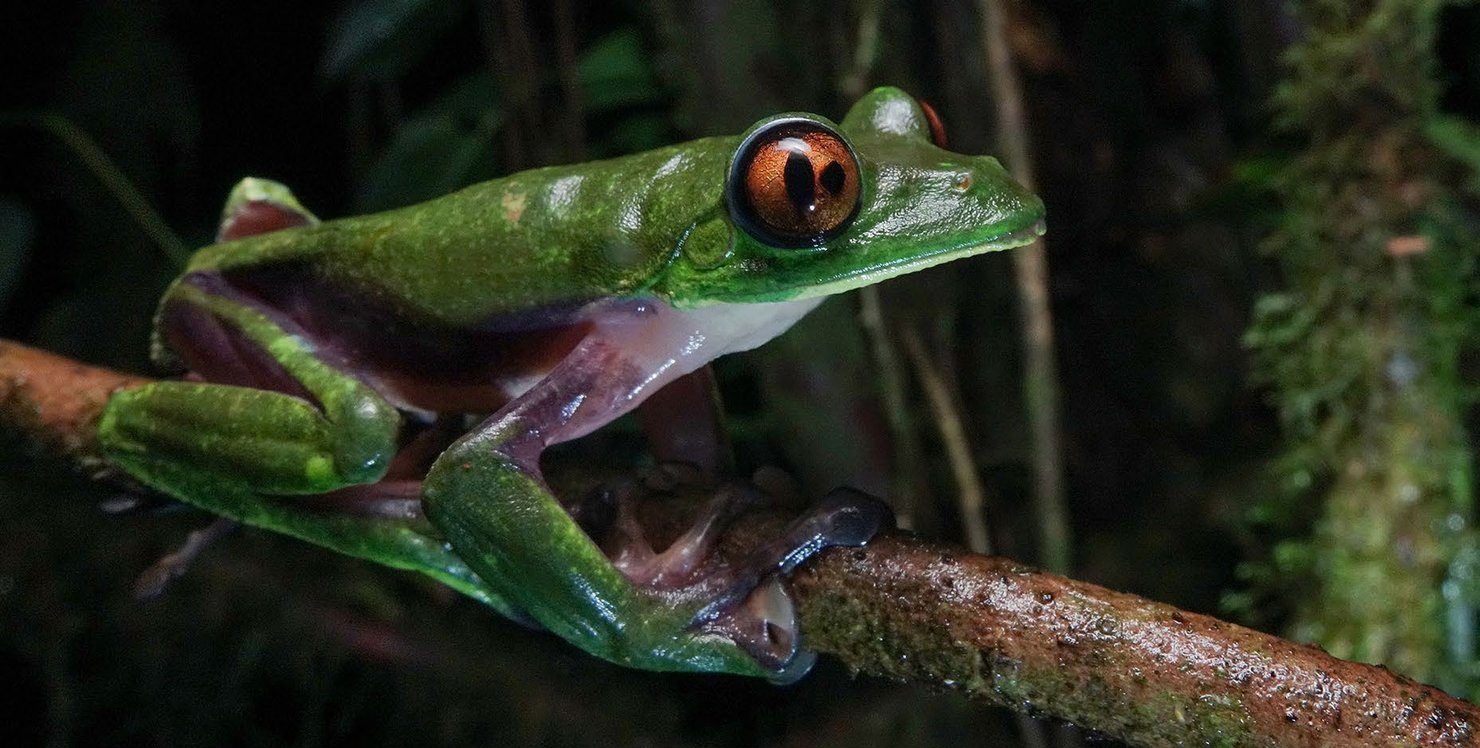
Photo: César L. Barrio-Amorós, from Barrio-Amorós et al. 2026, Salamandra
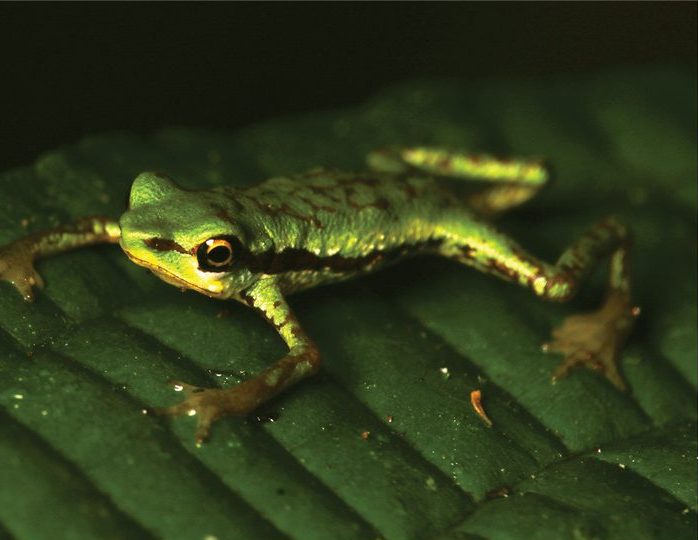
On the night of 11 August 2019, at 9:30 p.m., three naturalists were walking a narrow path beside a creek in the cloud forest of northwestern Ecuador. They were César Barrio-Amorós, Melissa Costales and Eric Osterman. On a leaf about 40 centimetres above the ground sat a tiny toad, barely 12 millimetres long, resting for the night. Eric photographed it where it sat.
It was a juvenile of Atelopus mindoensis, the Mindo harlequin toad. No one had seen one alive since 7 May 1989. The species was officially listed as "Critically Endangered (Possibly Extinct)." For thirty years, the only Mindo harlequin toads anyone could look at were preserved in museum jars.
The most endangered animals on Earth
To understand why that small toad mattered so much, you need to know about harlequin toads. The genus Atelopus is a group of often brilliantly coloured toads from Central and South America. They are small, slow, and usually live near fast mountain streams. Of all the backboned animals on Earth, this group appears to have suffered the most dramatic declines in recent decades.
The main culprit is a fungus called Batrachochytrium dendrobatidis, or Bd for short. It causes chytridiomycosis, a skin disease. Frogs drink and breathe partly through their skin, so a skin infection can be fatal. Bd spread through the mountains of the Americas in the 1980s and 1990s, and harlequin toads vanished from stream after stream.
Ecuador is one of the centres of harlequin toad diversity. When we wrote our paper, it had 25 species, 18 of them found nowhere else. Thirteen of those 25 had not been seen since the late 1980s or early 1990s. Every single one was listed as threatened. The Mindo harlequin toad, described by the herpetologist James A. Peters in 1973 from the cloud-forest town of Mindo, was one of the missing. Even at Mindo itself, surveys found none.
Five more toads
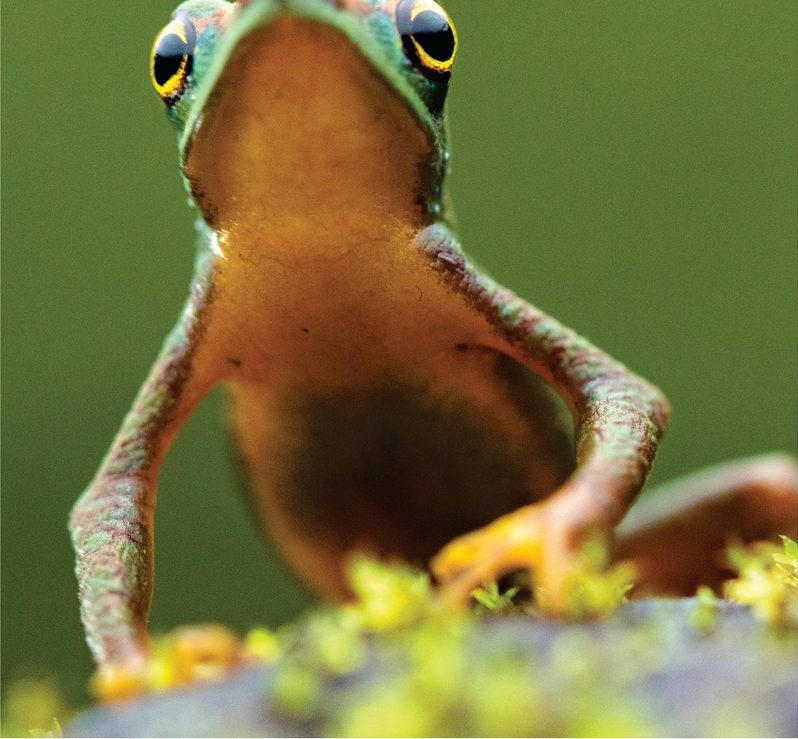
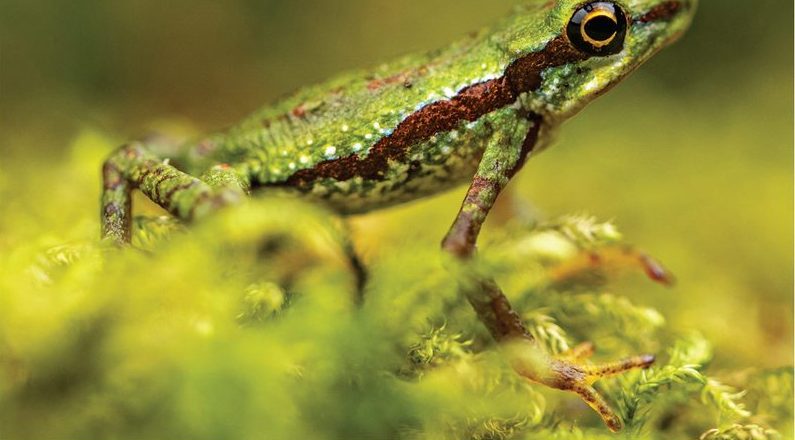
After that first sighting, César and his companions told our colleagues Alejandro Arteaga and Jose Vieira at Tropical Herping, a group that studies and photographs Ecuador's reptiles and amphibians. A second visit to the creek was organized, and it turned up another juvenile of the same size, upstream on the other bank, also asleep on a leaf. On later trips, Jose found five more: three juveniles and two adult males. The adults are small, green toads with reddish markings and a pale yellowish belly, and they are beautiful.
I was one of the co-authors who helped put the discovery on record. Our paper was titled "Back from extinction." We kept the exact site secret to protect the toads. We could say only that it lies in a private reserve with restricted access, 13 km from Mindo.
Juveniles were the best news of all. Young toads mean the population is breeding, not just clinging on with a few aging survivors. Luis Coloma and his team at Centro Jambatu in Quito examined thin slices of skin from two of the toadlets under the microscope and found no sign of the chytrid fungus.
Why lost toads come back
Our rediscovery was not the only one. In the years before, other harlequin toads had been found again after being given up for lost. These included Atelopus cruciger and A. mucubajiensis in Venezuela, A. varius in Costa Rica, several species in Ecuador, A. arsyecue in Colombia and A. tricolor in Bolivia. We saw three possible explanations. First, more people are now looking, because these toads are beautiful and famous for their plight. Second, a few animals may have survived the fungus, and their offspring are slowly rebuilding populations. Third, conditions in some places may have changed in the toads' favour, so that a few generations can refill an empty stream.
A single population is still a fragile thing. We recommended monitoring it, searching nearby creeks, starting a backup colony in captivity if that is possible, and working with local people so they can help watch over "this amazing species."
The only way to know an animal is gone is to keep looking, and sometimes the looking pays off.
A frog with two pupils
Keeping your eyes open works in more ways than one. On 25 May 2024, César, Diego Avilés and Josué Vargas were surveying at night at Fila Paraguas in southern Costa Rica, at about 1,500 metres. It is a spot outside the known range of the Blue-sided Treefrog, Agalychnis annae. This vivid green frog, with purple and blue flanks and orange eyes, is listed as Vulnerable. It suffers from habitat loss, from the same chytrid fungus, and from having only a few small, scattered populations left.
The adult frog they found looked perfectly normal until they got close. Its right eye had two pupils. One was a normal vertical slit. Beside it was a second, more irregular opening with the same sharp dark edge. The left eye was normal.
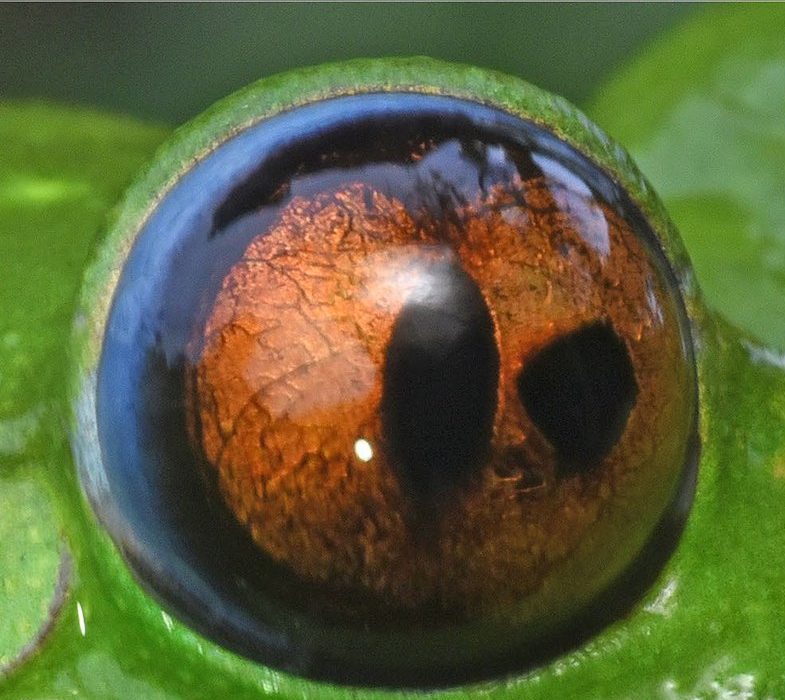
In people, having more than one pupil in an eye is called polycoria. In "true" polycoria, each extra pupil has its own ring of muscle and can open and close. In pseudopolycoria, the extra opening is really a hole or tear in the iris that only looks like a pupil. Telling them apart needs a special eye microscope, or examining the tissue after death. Neither was an option for a wild frog from a threatened population. A quick test with a flashlight seemed to show both openings reacting to light, but we could not be sure. We also could not rule out an old injury that had healed. These tadpoles swim freely for up to eight months before they become frogs, which leaves plenty of time for accidents.
What surprised us was the literature. We searched the major scientific databases for any record of multiple pupils in frogs, toads, salamanders, lizards, snakes or turtles. We found none. We did find photos online of a pet treefrog with the condition in both eyes and a seagull with two pupils in one eye, but nothing in the scientific record. As far as we can tell, this is the first documented case of a polycoria-like condition in an amphibian.
Keeping an eye out
The frog climbed, righted itself and avoided us just like any healthy treefrog. One odd eye in one animal is no cause for alarm. But small, threatened populations are exactly where we have the least baseline information. There, a few careful photographs of anything unusual, whether a missing eye, a doubled pupil or a toad nobody has seen in thirty years, can be the first sign that something is changing. Sometimes the change is for the better.
As we put it in the paper, it would be good to informally "keep an eye out."
The papers
- (2020) Back from extinction: rediscovery of the harlequin toad Atelopus mindoensis Peters, 1973 in Ecuador Herpetology Notes 13: 325–328
- (2026) Ocular anomaly in a Blue-sided Treefrog, Agalychnis annae (Amphibia: Anura: Phyllomedusidae), in Costa Rica Salamandra 62(2): 145–148