The Timor Gecko From South America
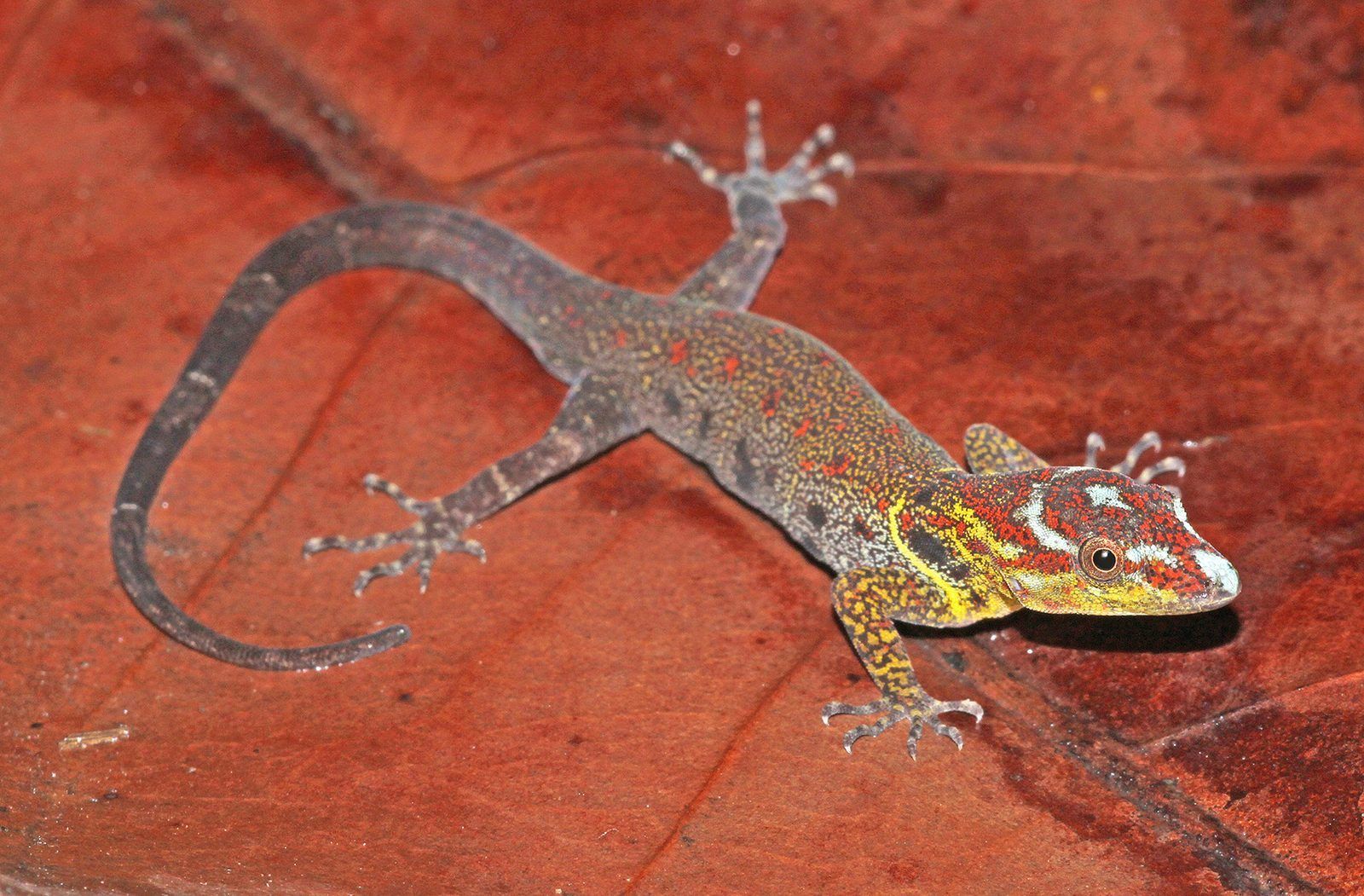
Photo: Jake Scott, from Rösler et al. 2025, Bulletin of Zoological Nomenclature
Some species are hard to find because they are rare. Others are hard to find because they were never there in the first place.
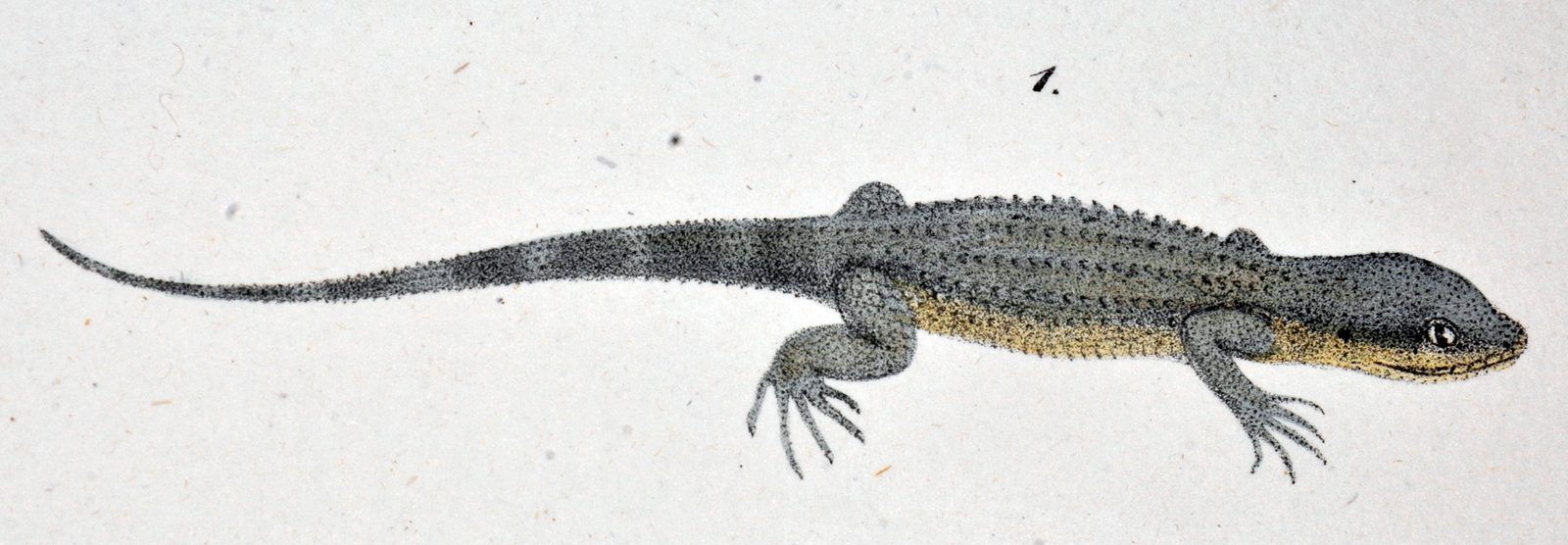
For almost two centuries the reptile lists of Timor included a gecko called timoriensis. It had been described in 1836 by two of the most famous herpetologists of all time, André Marie Constant Duméril and Gabriel Bibron, in their great work Erpétologie Générale. Their description was careful and detailed. It was based on a single specimen in the Paris museum, and it had a respectable collector: the French botanist Charles Gaudichaud-Beaupré.
In years of surveys across Timor-Leste, my colleagues and I never saw anything like it. We found a whole set of new bent-toed geckos, but no timoriensis. Nobody else had found one either.
Something did not fit
Scarcity alone proves little. Small geckos can live in tiny areas, and surveys miss things. But my co-authors and I had, between us, decades of experience with Southeast Asian geckos, and the features described in 1836 simply did not match any of them. So Herbert Rösler, Lee Grismer, Ivan Ineich of the Paris museum and I decided to look at the specimen itself.
The gecko, catalogue number MNHN 0810, travelled on loan from Paris to the United States and to Germany. As we wrote in our paper, it "completed a voyage not unlike those of Charles Gaudichaud-Beaupré." We measured it, counted its scales and photographed its head, hands and feet in detail.
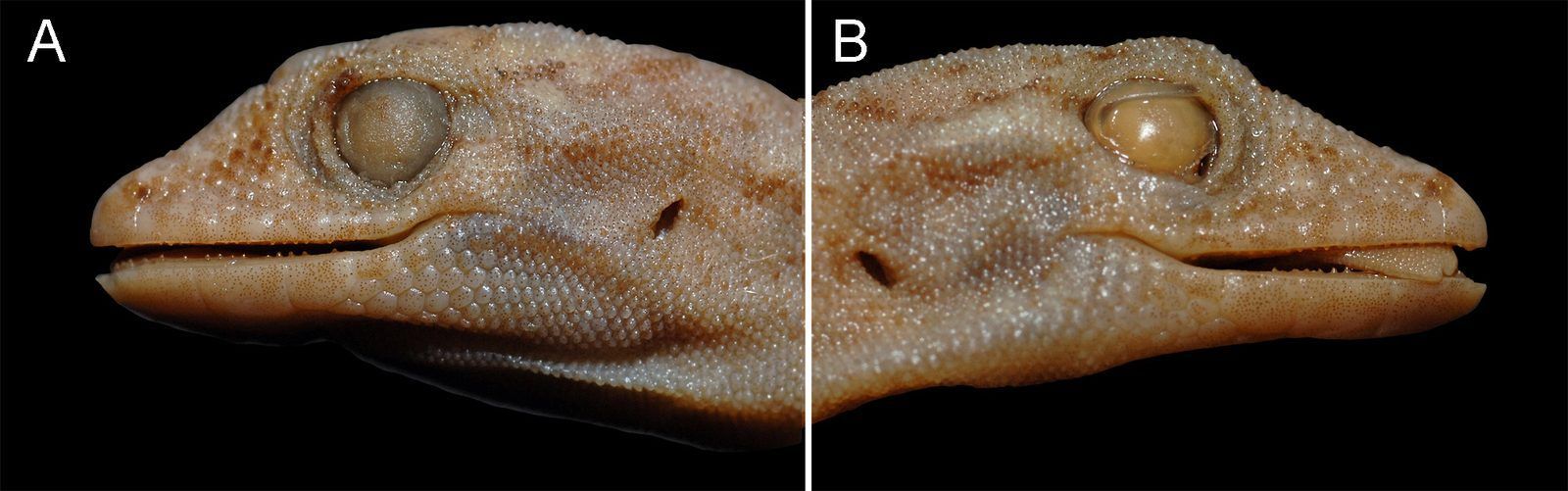
It had no bumps along its back, the scales around its mouth did not match, and its toes were long and slender. It could not belong to Cnemaspis, the Asian genus in which it had been placed since 1965. Step by step we ruled out every gecko genus from every place Gaudichaud had visited: Australia, Brazil, South Africa, Guam, Hawaii, Mauritius, Réunion, Timor and the islands near New Guinea. Only three candidates were left, all of them from South America. The best fit was Gonatodes, a group of small, day-active geckos found from the Caribbean to South America.
Then we narrowed it down to the species. Scale for scale and stripe for stripe, the Paris specimen matched Gonatodes humeralis, one of the most widespread geckos in tropical South America. The "Timor gecko" was a South American gecko with the wrong label.
A shipwreck and a mix-up
How does a South American gecko end up labelled "Timor"? The answer, we think, lies in a shipwreck.
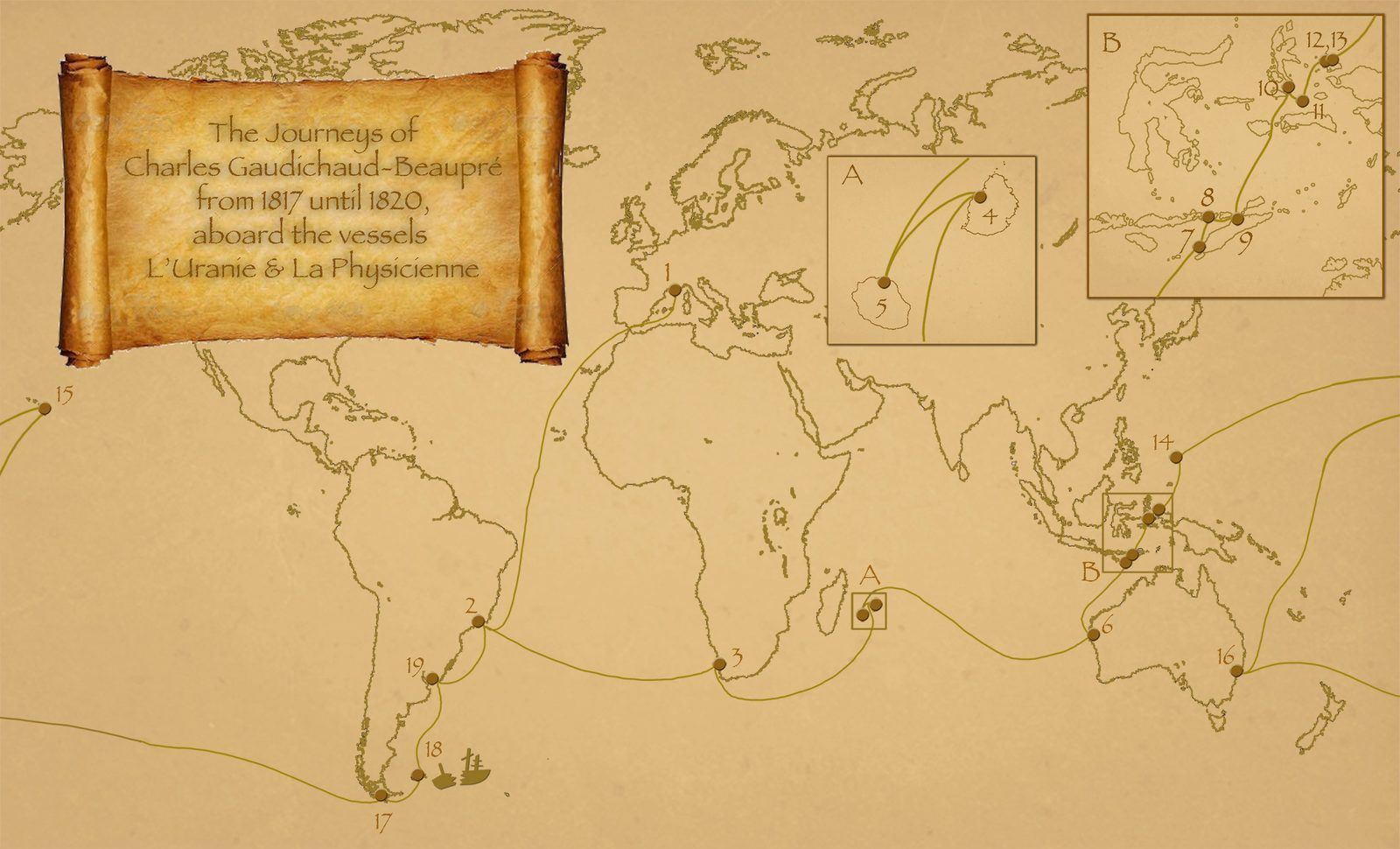
Gaudichaud sailed around the world from 1817 to 1820 aboard the French ship L'Uranie, under the command of Louis de Freycinet. The voyage stopped in Rio de Janeiro on the way out, and later in Kupang on Timor and at Dili. Rio was a busy port, with a lively trade in natural history specimens from all over South America.
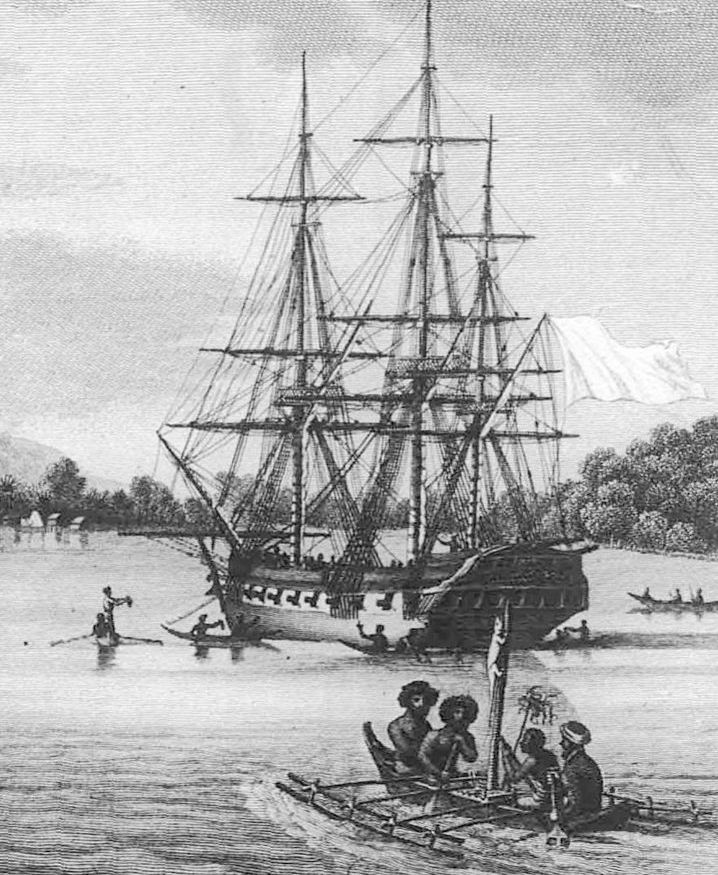
On 13 February 1820, on the way home, L'Uranie ran aground in the Falkland Islands. The crew hauled whatever they could save onto a nearby beach. Thousands of plant specimens were lost, although the animals collected in Rio seem to have survived. After a month marooned, the crew and their cargo were carried by another ship, the Mercury, to Montevideo, where Freycinet bought it and renamed it La Physicienne.
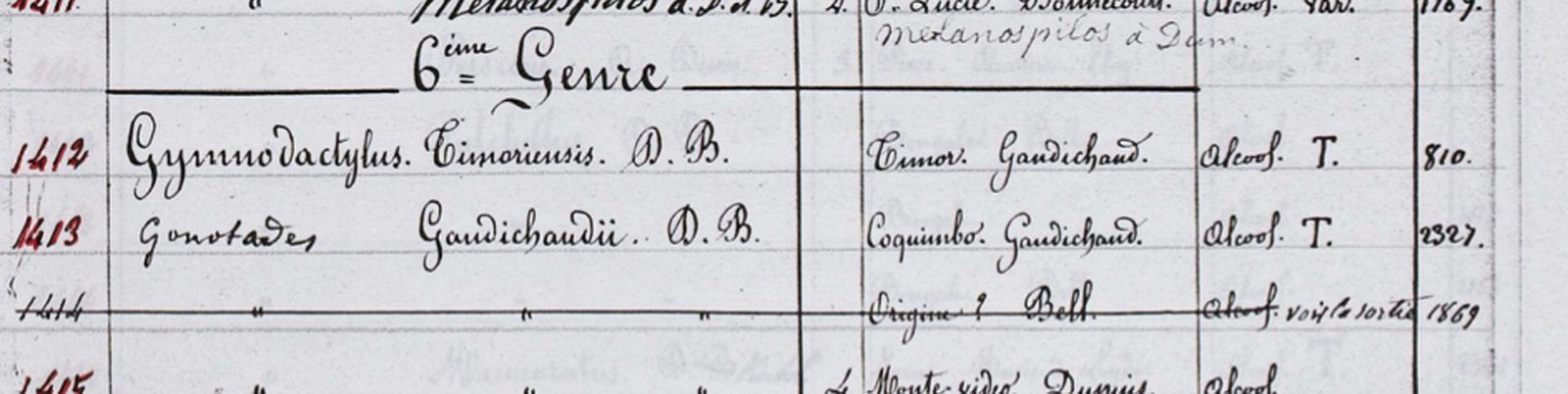
We believe the gecko was obtained in Rio de Janeiro at the start of the voyage and, in the desperate rush to save the cargo, ended up packed with the material from Asia. When it reached Paris it was catalogued with the Asian collections, under "Timor". The 1864 museum catalogue still shows it that way.
A problem with the rules
Solving the mystery created a new problem. In zoology, the oldest available name for a species usually wins. The name timoriensis was published in 1836; humeralis came nineteen years later, in 1855. Strictly applied, the rules would force every scientist, field guide and government list in South America to rename one of the continent's best-known geckos after an island on the other side of the world.
We thought that sticking rigidly to the naming rules, or nomenclature, would only cause confusion, and said so:
"Nomenclature must serve science, and it must do so broadly, and, as such, utility (for conservation or species management) should trump nomenclatural purity." — Rösler et al. 2019
The rules do allow an escape, but only through a formal application to the International Commission on Zoological Nomenclature, the body that rules on names. In December 2025 Herbert Rösler, Ivan Ineich, Teresa Avila-Pires, Marinus Hoogmoed and I published that application. We showed that humeralis had been used in well over 400 publications in seven languages, and in government documents of ten South American countries. A Google Scholar search found 728 results for "Gonatodes humeralis" and just nine for "Cnemaspis timoriensis". We asked the Commission to suppress timoriensis for good. While the case is under consideration, humeralis stays in use.
Not the only one
This was not the first South American gecko I have met on an Asian shelf. In the Zoological State Collection in Munich, Herbert Rösler, Frank Glaw and I examined an old gecko catalogued as Gymnodactylus marmoratus from Java. It was actually Gymnodactylus geckoides, a gecko from Brazil. For a while we thought it might be a lost specimen of the Bavarian explorer Johann Baptist von Spix, who described the species in 1825. The trail led through the private collection of a duke, but in the end we could not prove where it came from.
Stories like these are a reminder that a museum label is a historical document, written by people working fast, far from home, sometimes in a crisis. Most labels are right. The ones that are wrong can spread errors for centuries, into maps, checklists and conservation plans. Our Timor gecko, it turns out, was never missing from Timor. It was living all along in South America, as Gonatodes humeralis, one of the most beautiful geckos on that continent.
The papers
- (2017) Identity and history of an odd, old gecko (Gymnodactylus geckoides Spix, 1825, Phyllodactylidae) from the Zoologische Staatssammlung München, Germany Herpetology Notes 10: 89–99
- (2019) The purportedly Indo-Australian gecko species Cnemaspis timoriensis (Duméril & Bibron, 1836) is actually the first named species of the neotropical genus Gonatodes Fitzinger, 1843 (Squamata: Gekkonidae) Zootaxa 4576(3): 483–509
- (2025) Case 3798 – Gymnodactylus humeralis Guichenot, 1855 (currently Gonatodes humeralis; Reptilia, Sphaerodactylidae): proposed conservation of the specific name by suppression of Gymnodactylus timoriensis Duméril & Bibron, 1836 Bulletin of Zoological Nomenclature 82: 14–30