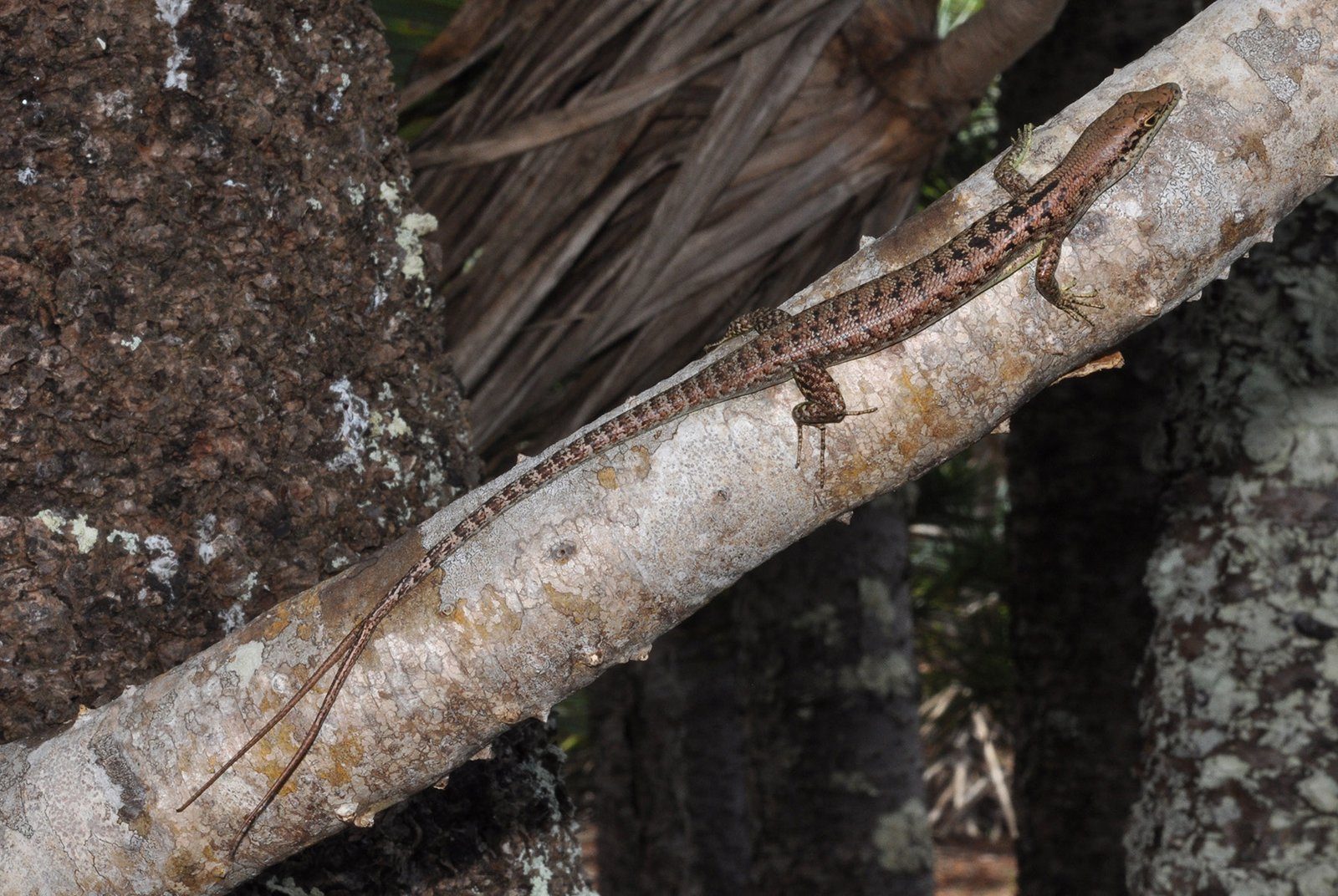
The Lizard With Two Tails
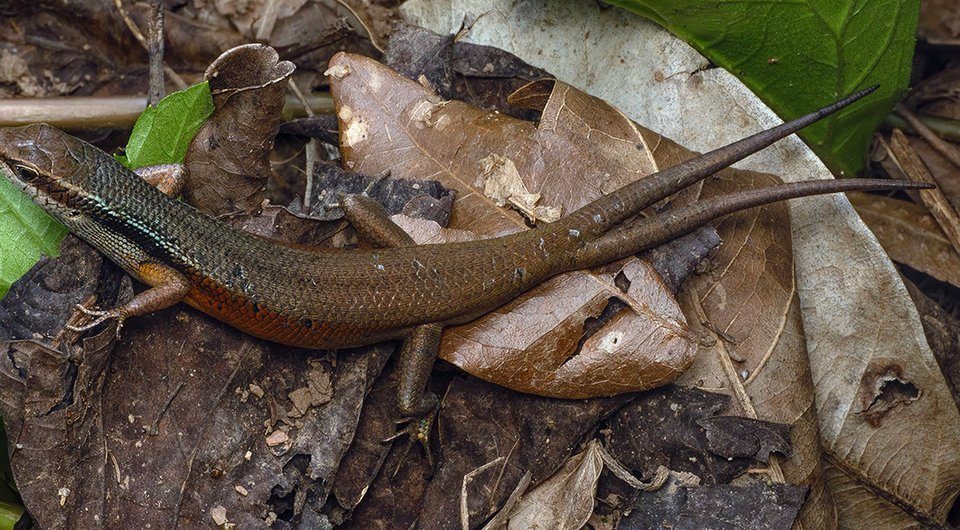
Photo: Ivan Ineich, from Kaiser et al. 2024, Herpetology Notes
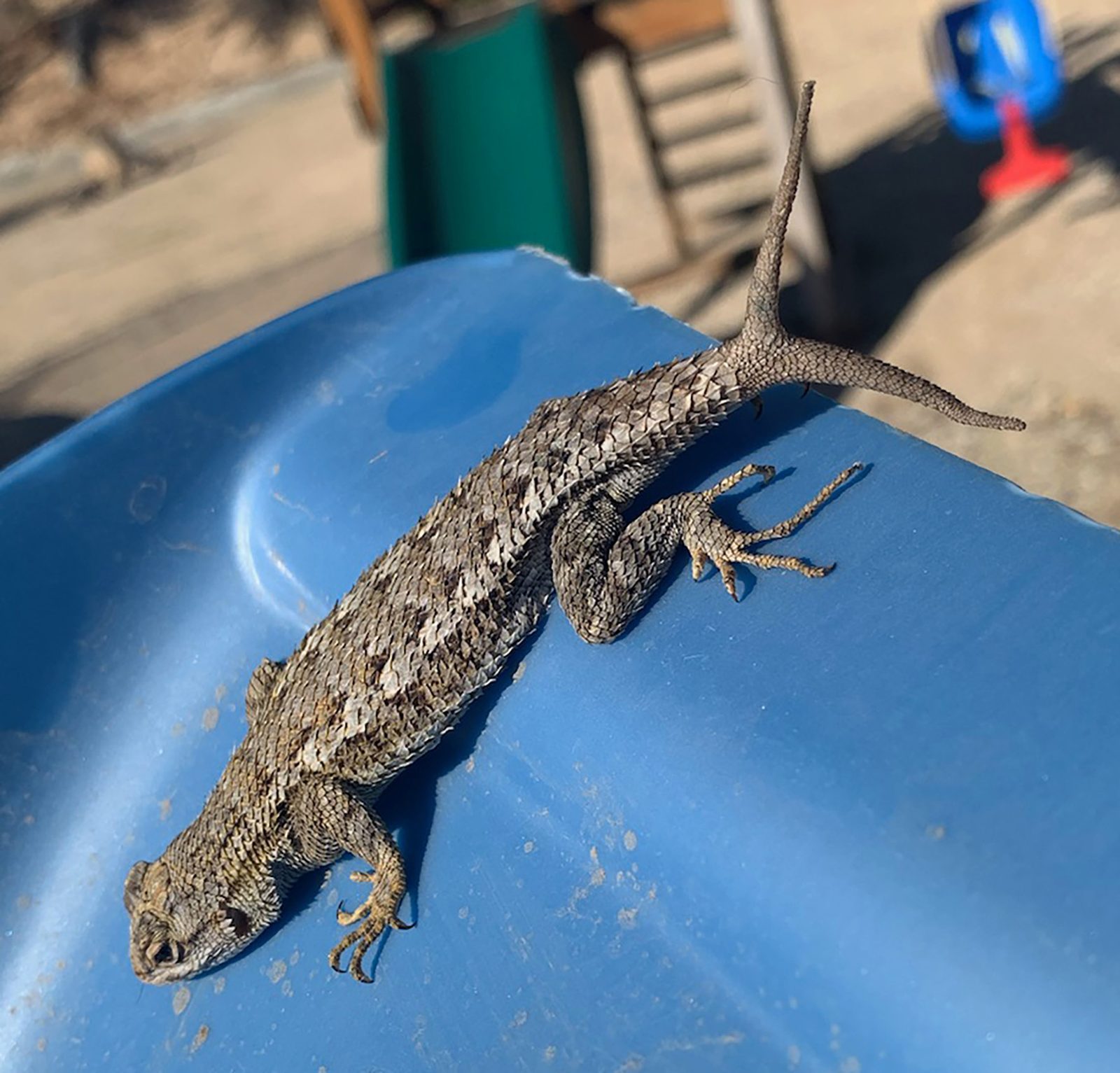
On a late-October morning in 2022, at 9:48 a.m., a Western Fence Lizard was basking in full sun on a child's play structure in a backyard in Victorville, California. That is the desert town where I teach. Nothing about the scene was unusual. Fence lizards are some of the most familiar reptiles in the American West, and anybody who has walked past a sunny wall in the Mojave has seen one do push-ups.
This one, though, had two tails.
My colleague Tim Baum saw it. The family who lived there had already taken pictures, without any idea that anyone might care. They were right to take them, as it turned out, because the lizard was never seen again. Those photos became the start of a project that has kept me busy ever since. It has brought in reports of forked tails from Sri Lanka, Costa Rica, New Caledonia, Australia and Timor-Leste.
A tail you can afford to lose
To understand a forked tail, you first have to understand why a lizard can lose its tail at all. Many lizards can shed the tail on purpose, a trick called caudal autotomy, which just means "self-amputation of the tail." The tail bones have built-in weak spots called fracture planes. When a predator grabs the tail, the lizard lets it snap off along one of these lines. The dropped tail keeps wriggling, the predator gets distracted or gets a snack, and the lizard gets away.
It is not free. A lizard stores fat in its tail, and females without tails can end up laying fewer eggs. Tailless lizards also court and mate less. So the lizard regrows the tail as fast as it can. The new tail looks similar from the outside, but inside it is built differently, around a rod of cartilage instead of a chain of bones. The scales usually look different too, smaller and less regular, which is how you can spot a regrown tail.
Now and then, regrowth goes a bit wrong. Perhaps the tail was only half broken. Perhaps it was injured and began to heal while it was still attached. Then the body can start growing a new tail at the wound, while the old one stays put. The result is a forked tail, or in the jargon, a furcation.
Not a monster, just a survivor
For centuries, lizards like this were filed under curiosities. One of the earliest scientific mentions is in a 1642 book by the Italian naturalist Ulisse Aldrovandi called Monstrorum Historia, "A History of Monsters." Tim and I wanted to know how rare these monsters really are. Two research teams had each published a list in 2020, and the lists did not quite agree. So we combined them, checked every source we could track down, and searched for everything published since.
By our March 2024 cut-off, we had counted forked tails in 250 lizard species from 25 families. That is well over half of all lizard families. In 91 percent of those species the tails had two ends. Three-, four- and five-tailed lizards are rarer. A tegu in Argentina grew six tails, and the record belongs to a flat-tailed house gecko from Laos with nine.
The more interesting number was a trend. Reports of forked tails were coming in far faster over the last twenty years than ever before. It is hard to believe lizards have suddenly started growing more tails. The likely reason is that more people are out with phone cameras and posting what they find on sites like iNaturalist. That changed how we thought about the whole phenomenon. A forked tail is not especially rare. It is a normal, if uncommon, result of a lizard surviving an attack.
"Perhaps a furcated tail is a testament to survival and a trophy to behold." — Baum & Kaiser 2024
The floodgates open
Once our list was published, other people started writing to me with records of their own. Several became papers.
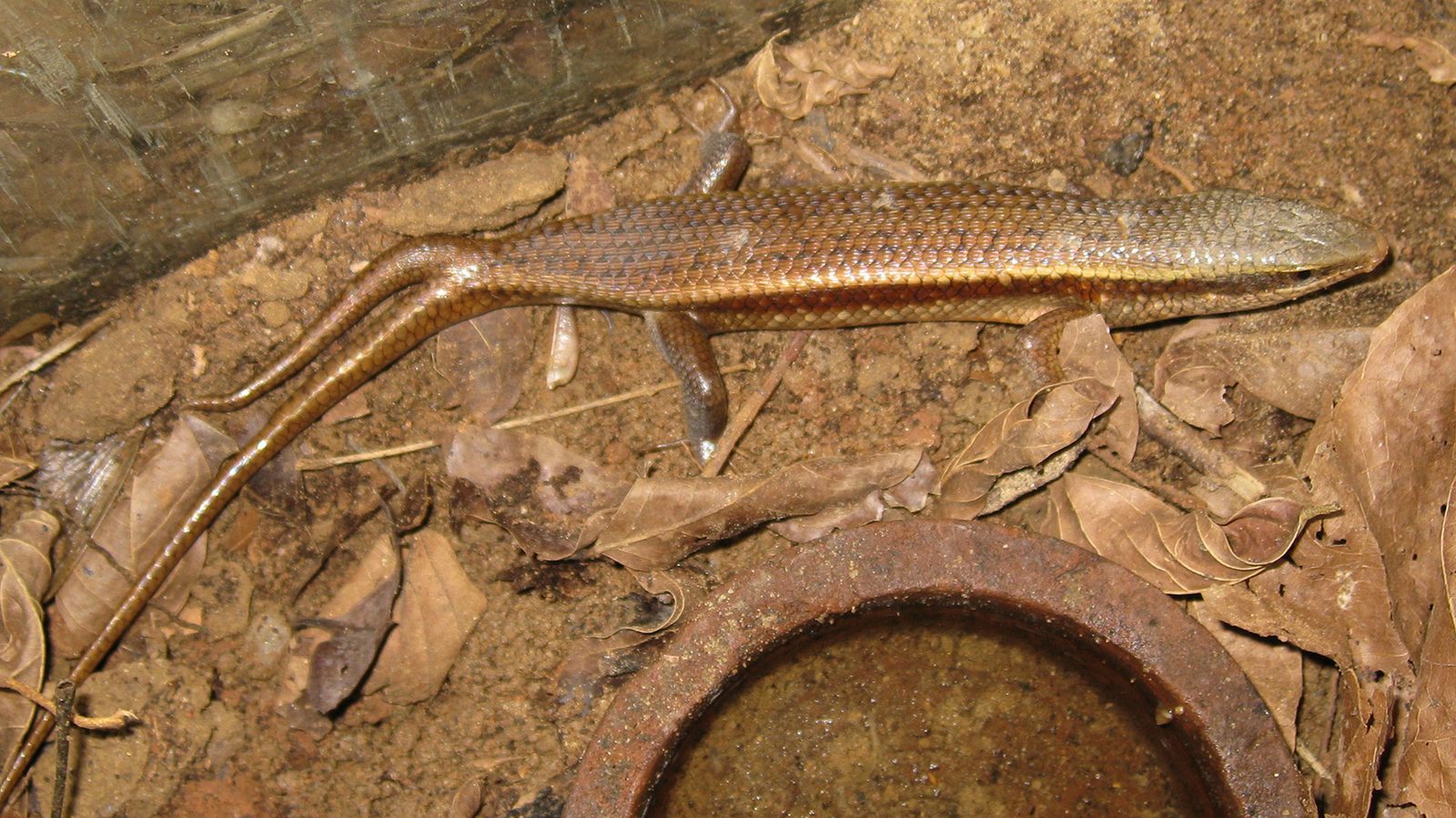
In Sri Lanka, the herpetologist Anslem de Silva had photographed a Keeled Sri Lankan Mabuya, Eutropis lankae, a bronze-backed skink, in a garden in Gampola back in 2009. Gampola was the capital of a Sinhalese kingdom in the 1300s. The skink's second tail was only about a third as long as its body and stuck out sideways. It was the first case known for the species. When we tallied the few known cases in its genus, more than half were duplications, compared with about a fifth across skinks as a whole. The sample is tiny, but it hints that the long, thin tails of these skinks may split closer to the body.
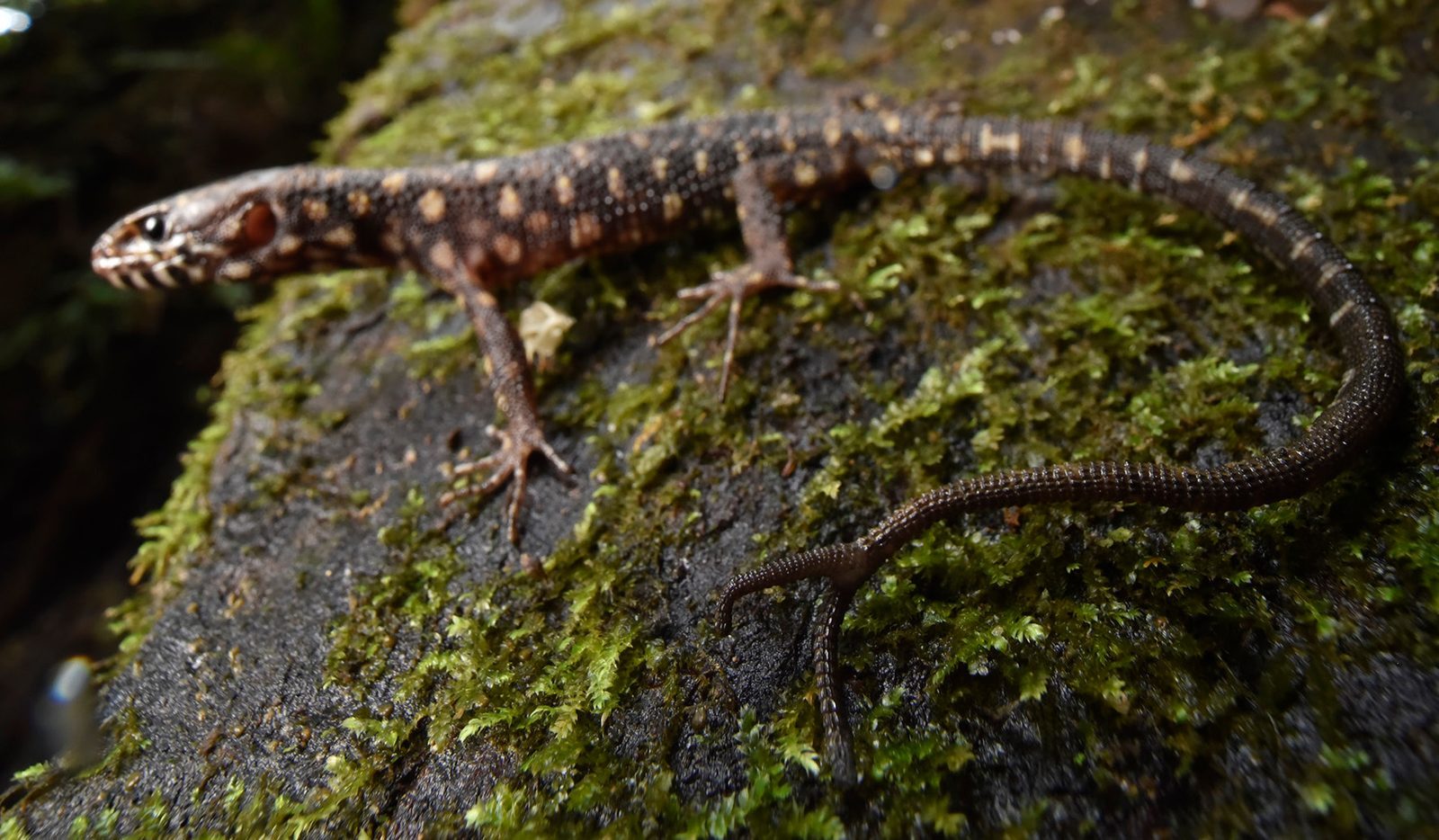
In Costa Rica, my long-time collaborator César Barrio-Amorós found a young Tropical Night Lizard, Lepidophyma reticulatum, a black lizard with yellow spots, resting under a log. The very tip of its tail was forked. Night lizards form their own small family, and no forked tail had ever been published for any of them. We could not resist calling the paper "A reptile dysfunction."
In New Caledonia, Magaly Holden and Ivan Ineich had caught a large male skink, Epibator nigrofasciolatus, on Îlot Brosse in 2012. It is an uninhabited islet about 4 km south of the Isle of Pines. The fork in his tail was spectacular. The original tip and the regrown one were almost exactly the same length, 58 and 60 millimetres. The split began well down a tail longer than his body. He climbed through the trees with no sign that it slowed him down. It was the first case for the genus and for New Caledonia.
A twin that may never have been injured
The most puzzling case came from Australia. River Kedzier-Hurst, at the University of Sydney, had been searching iNaturalist and Facebook for other reasons and kept finding forked-tailed skinks that were not on our list. Together we added 11 new records. They included the first known cases in four whole genera, and they brought the number of Australian skink species with forked tails to at least 33.
To make sense of them, we sorted the tails into three groups. Some had clearly regrown after the tail broke off. Others had sprouted a side branch after an injury, while the original tail stayed on. The third group had no visible sign of injury or regrowth at all.
One skink fell squarely into that third group. The photographer David White found an adult Carlia longipes basking on leaf litter at Wonga Beach, Queensland. Its tail divided into two branches that were within five percent of each other in length. Both had normal scales and normal colour. Neither looked regrown. We suspect this may be a true developmental twin, a tail that split while the lizard was still growing, maybe even in the egg. The only way to be sure would be an X-ray to see whether each branch has its own backbone.
The tail that wiggled
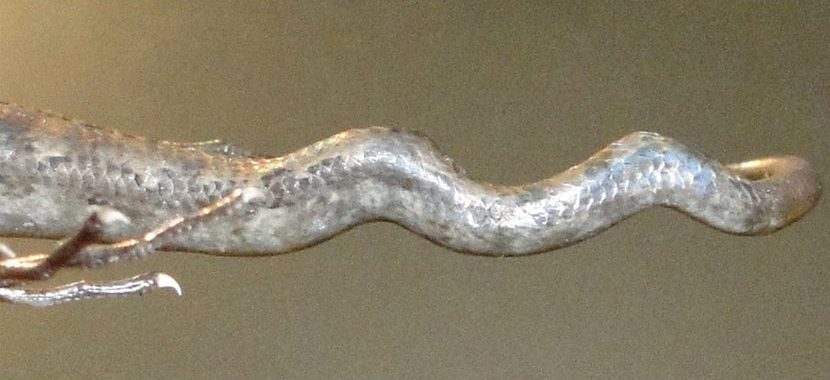
Not every odd tail is forked. On 4 February 2010, during our survey of Timor-Leste's reptiles, I caught a small skink, Sphenomorphus melanopogon, in the leaf litter of a coffee forest near the Meleotegi River in the mountains of Ermera. I was struck by its tail. It ran in waves, like a ribbon, both from above and from the side.
Pet owners and vets know this "kinked tail." In captive reptiles it usually comes from poor diet or bad heating. In the wild it is hardly ever reported. Nobody had ever looked inside one. Years later, with Mark O'Shea, Thore Koppetsch and Justin Bernstein, we had the specimen X-rayed at the Smithsonian's museum support centre in Maryland. The kinks started around the tenth tail bone and ran on for another ten bones. The surprise was where the bending was. Almost all of it was inside the bones themselves, not in the joints between them. The bones had grown curved. We think the muscles on either side of the tail may have been uneven. The stronger side would have pulled the bones slowly out of shape as they grew.
Other researchers have suggested that kinks like this could serve as an early warning sign of pollution, or of eggs developing at the wrong temperatures. At a time when people are poisoning habitats and warming the planet, that is worth watching for.
Why a split tail matters
None of the lizards in these papers seemed troubled by their tails. The fence lizard basked like any other. The New Caledonian skink climbed nimbly with a deep fork. The kinked skink was in just as good condition as its neighbours. A forked tail is basically a scar, a record that a predator once got hold of this animal and lost.
For me, the bigger lesson is about who does science now. For centuries these lizards turned up one at a time in obscure notes. Today a family in a Mojave backyard, a naturalist in Queensland or a hiker with a phone can add a record that counts. If you see a lizard with two tails, take a picture, note where and when, and post it. Someone like me is probably looking for it.
The papers
- (2024) Tail furcations in lizards: a revised summary and the second report of tail duplication in the Western Fence Lizard, Sceloporus occidentalis Baird & Girard, 1852 Herpetology Notes 17: 459–475
- (2024) Observation of a bifurcated tail in an adult arboreal skink, Epibator nigrofasciolatus (Peters, 1869), the first published case for the genus and for New Caledonia Herpetology Notes 17: 683–685
- (2024) A twinning tail: first report of a tail duplication in the Keeled Sri Lankan Mabuya, Eutropis lankae (Deraniyagala, 1953) Herpetology Notes 17: 709–711
- (2024) A reptile dysfunction: tail bifurcation in the Costa Rican Tropical Night Lizard, Lepidophyma reticulatum Taylor, 1955, a first for the family Xantusiidae Herpetology Notes 17: 815–816
- (2025) A tale of a wiggly tail: first osteological examination of the kinked-tail phenomenon in a wild-caught skink, Sphenomorphus melanopogon (Duméril & Bibron, 1839), from Timor-Leste Herpetology Notes 18: 743–753
- (2026) Tails of two tips: first reports of tail furcations in a dozen Australian skink species, with the description of a highly unusual tail duplication morphology in Carlia longipes (Macleay, 1877) Herpetology Notes 19: 579–592