Do King Cobras Take the Train?
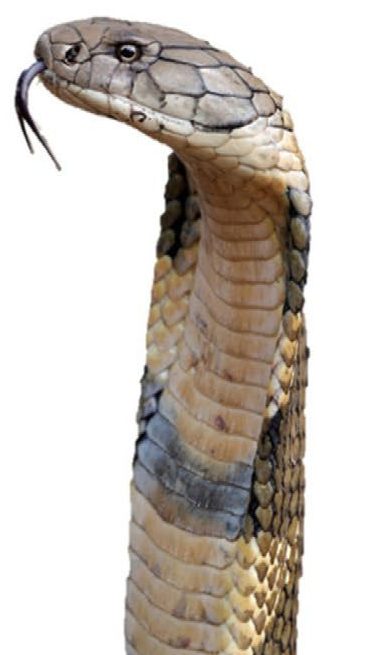
Photo: Dikansh S. Parmar, from Parmar et al. 2026, Biotropica
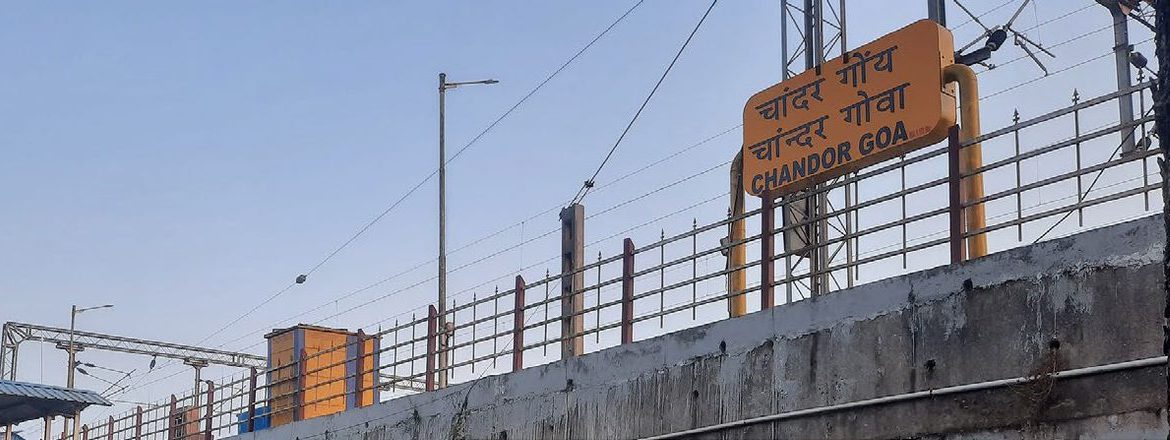
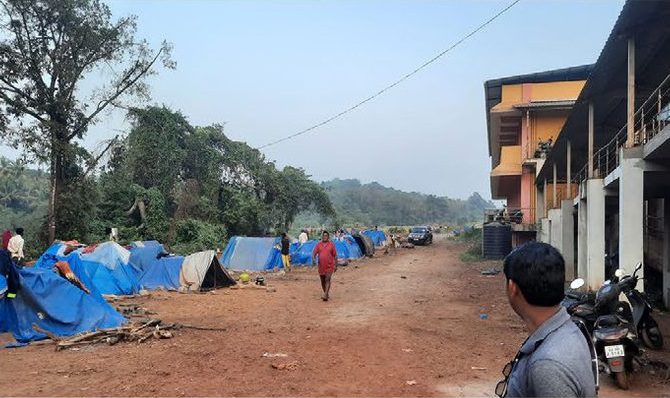
Chandor is a village in the south of Goa, a few kilometres inland from the beaches that draw tourists to India's smallest state. It has a railway station, a concrete platform raised on pillars, and a patch of rough ground beside the tracks where labourers live in blue-tarp tents. It is not a place where anyone expects to meet a king cobra.
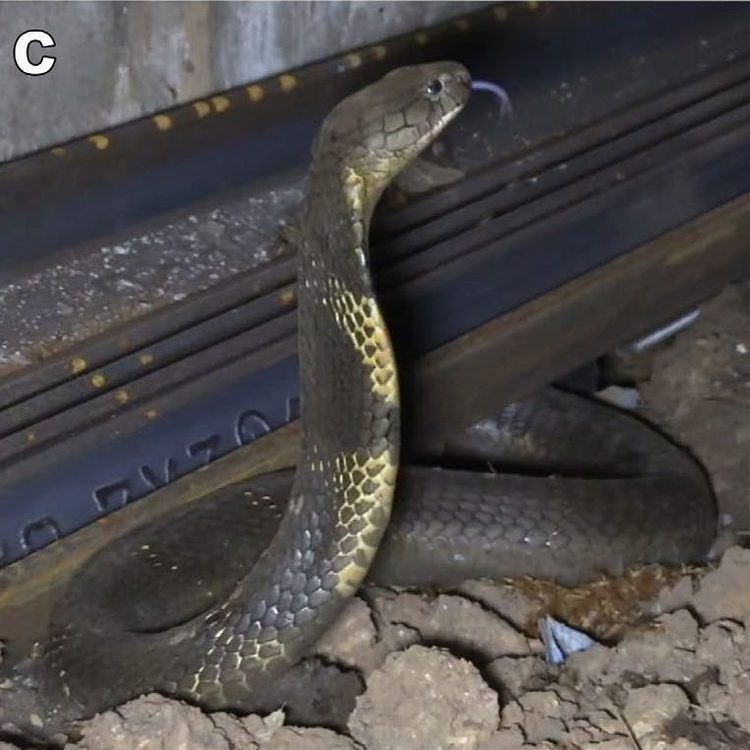
Yet one night, a king cobra came out from under a pile of spare railway tracks stored beside that platform. The labourers in the tents saw it and called for help. Rinku Gupta, a volunteer with the Animal Rescue Squad Goa, came, caught the snake, and handed it to the forest department so it could be released into proper forest.
That one snake, in that one improbable spot, became the thread that my colleague Dikansh Parmar pulled until a whole idea came loose.
Twenty-two years of rescue calls
To understand why the Chandor cobra was odd, you first have to know where king cobras in Goa normally live. Nobody had mapped that carefully before.
King cobras are the longest venomous snakes in the world. For a long time they were treated as one species spread across South and Southeast Asia, but a 2024 study showed that the population along India's Western Ghats, the mountain chain that runs down the country's west coast, is a species of its own: the Western Ghats King Cobra, Ophiophagus kaalinga. Its range is much smaller than that of its widespread relative, which makes it a species to worry about.
Dikansh had access to a remarkable archive. Between 2002 and 2024, the volunteers of the Animal Rescue Squad Goa, a non-governmental organization led by Amrut Singh, an Honorary Wildlife Warden, had rescued 120 king cobras from 47 separate places in the state and released every one of them back into the wild. They had also chatted with villagers at each rescue: people readily reported king cobras in villages and forests, but not one person mentioned them in rice paddies.
We fed those rescue locations, along with climate, vegetation and "human footprint" data, into a species distribution model. That is a computer method that asks: given where this animal has actually been found, what kind of place does it like, and where else in the landscape looks like that? Dennis Rödder at Museum Koenig in Bonn guided the modelling methods and software, and my own job was mostly helping to build the manuscript and its figures and finish the writing.
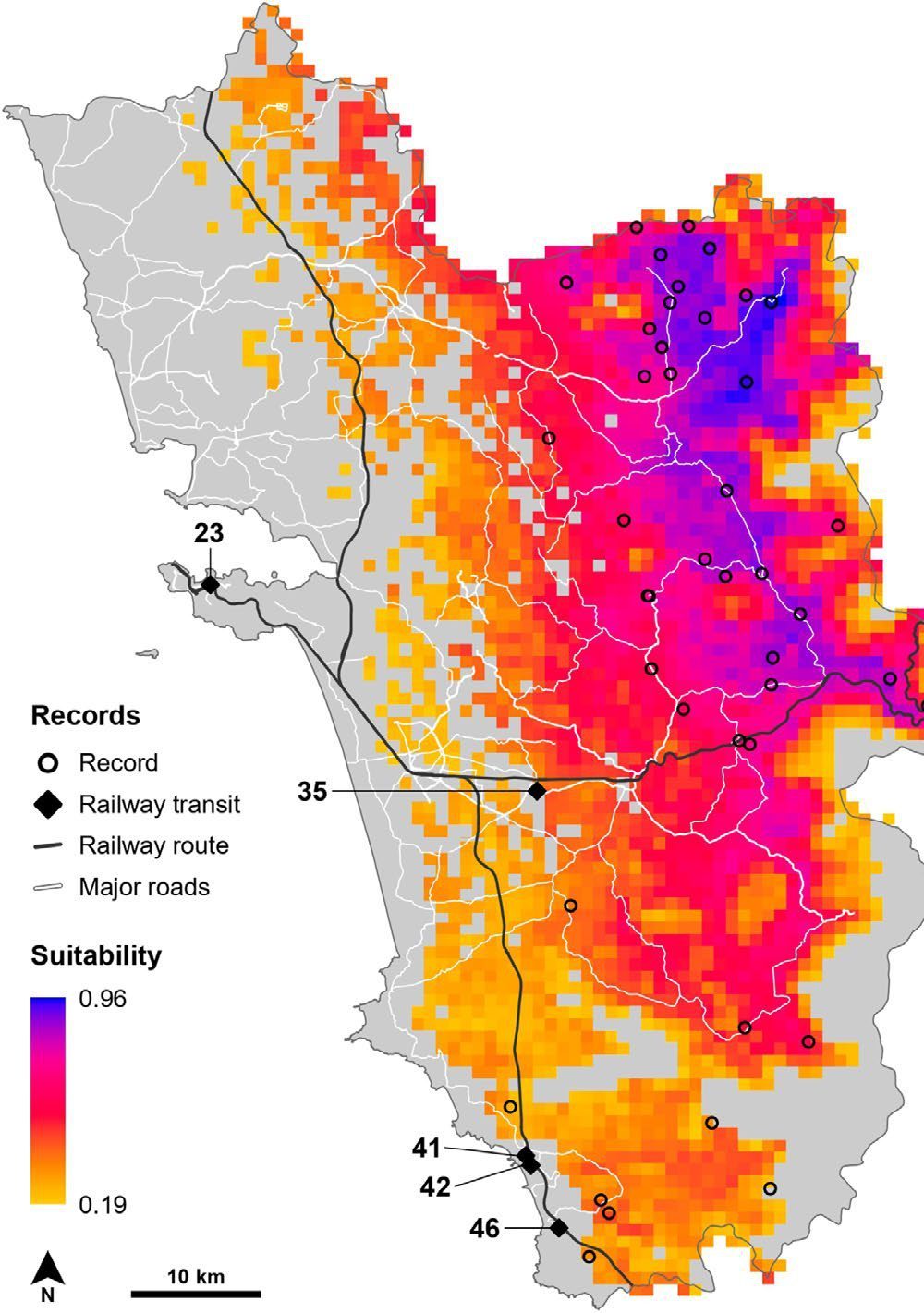
The answer was clear. King cobras in Goa want the hot, very wet, forested interior near the Western Ghats, especially along rivers and streams. The dry coast and beaches are poor habitat. Most of the rescue records sat exactly where the model said they should.
Five did not.
Five snakes in the wrong place
Those five rescues came from places the model rated as poor king cobra habitat: on average, the rescue sites in good habitat scored 0.84 on a scale of suitability from 0 to 1, while these five scored only 0.48. Statistically, the gap was not subtle.
And all five were close to a railway. Chandor was one. In September 2021, a king cobra had been rescued in the port town of Vasco da Gama, about 200 metres from the station; a local newspaper ran the story under the headline "Cobra takes train to Vasco." Three more rescues, at Loliem, Patnem Cancona and Palolem, were between 220 and 330 metres from the tracks.
Chandor matters because of where the trains come from. Before they roll down into Goa's lowlands, trains pass through Castle Rock in neighbouring Karnataka, a village surrounded by the dense forests of the Dandeli Tiger Reserve: prime king cobra country. From Castle Rock it is about 85 kilometres by rail to Chandor and about 120 kilometres to Vasco.
The hypothesis
So we proposed something simple. A king cobra living in good forest near the tracks, drawn by rats in a stationary goods wagon or by a dark, sheltered corner, climbs aboard. The train moves. The snake gets off, or is found, somewhere it would never have reached on its own.
"Railways may act not just as corridors for active movement, but as high-speed conduits." — Parmar et al. 2026
We were not starting from nothing. Snakes turn up on Indian trains often enough to make the news: in 2024, three such incidents were reported within a single 30-day period, and a 2019 news report showed a king cobra being removed from a train in Uttarakhand. Dikansh himself had rescued a cobra from a crowded train back in 2017. Other scientists had shown that king cobras in Thailand use road culverts to cross highways. What we were suggesting was a different, passive kind of travel: the snake does not walk the corridor, it rides it.
Dikansh had already seen people move snakes by accident across India. Eastern Bronzebacks, slender tree snakes native to India's northeast, have been turning up in Surat, in Gujarat, more than 1,700 kilometres from their nearest known home, carried in shipments of plants. Juveniles found there in October 2025 suggest the stowaways may now be breeding.
Why it matters
A hypothesis is only useful if it can be tested, and we suggested how: camera traps and trained railway staff at the stations where snakes might board and alight; genetic tests to see whether a "lost" snake matches a population far up the line; chemical signatures in its tissues that reveal where it grew up; and tracking tags.
The stakes are real for both sides. As our paper points out, there is no antivenom specifically made for king cobras in India, and a bite can kill within 15 minutes. A snake arriving in a village where no one has ever seen one is frightening, and frightened people tend to kill snakes, putting themselves at risk in the process. The rescue squad has been running awareness work in Chandor for exactly that reason.
There is a quieter lesson, too. Everything in this study rested on 22 years of rescue records kept by volunteers. Groups like the Animal Rescue Squad Goa do not only save snakes and people; without anyone asking them to, they have been building a long-term record of where these animals live.
Snakes on a train
The paper appeared in the journal Biotropica in January 2026 under the title "Snakes on Trains," and the world noticed. The press list we kept runs to more than fifty items: Der Spiegel in Germany, Science and Scientific American in the United States, The Independent in Britain, Down To Earth and The Times of India at home in India, and outlets in Greece, Italy, Spain, Hungary, Japan, China, Australia and South Africa. In April 2026 the German science magazine Naturwissenschaftliche Rundschau ran a piece asking whether the Indian king cobra travels by train.
In Scientific American, the herpetologist Emily Taylor, who was not involved in our work, put it better than we could: "This is what good science does—provides a strong hypothesis that we can continue testing as new evidence accumulates."
That is exactly where we are. We have not caught a king cobra buying a ticket. But five snakes in the wrong places, all beside the tracks, are a pattern worth taking seriously. Time, as we wrote, will tell.
The papers
- (2026) Snakes on trains: railways may sway Goa’s king cobra distribution Biotropica 58(1): e70157
- (2026) Whither Dendrelaphis in western India? A critique of recent papers by Vaishnav and Ghadi (2025) and Puranik et al. (2025) Reptiles & Amphibians 33: e24861