Deadly Snakes, Doubtful Names
Photo: Rushenb (Thai National Parks), CC BY-SA 4.0, via Wikimedia Commons
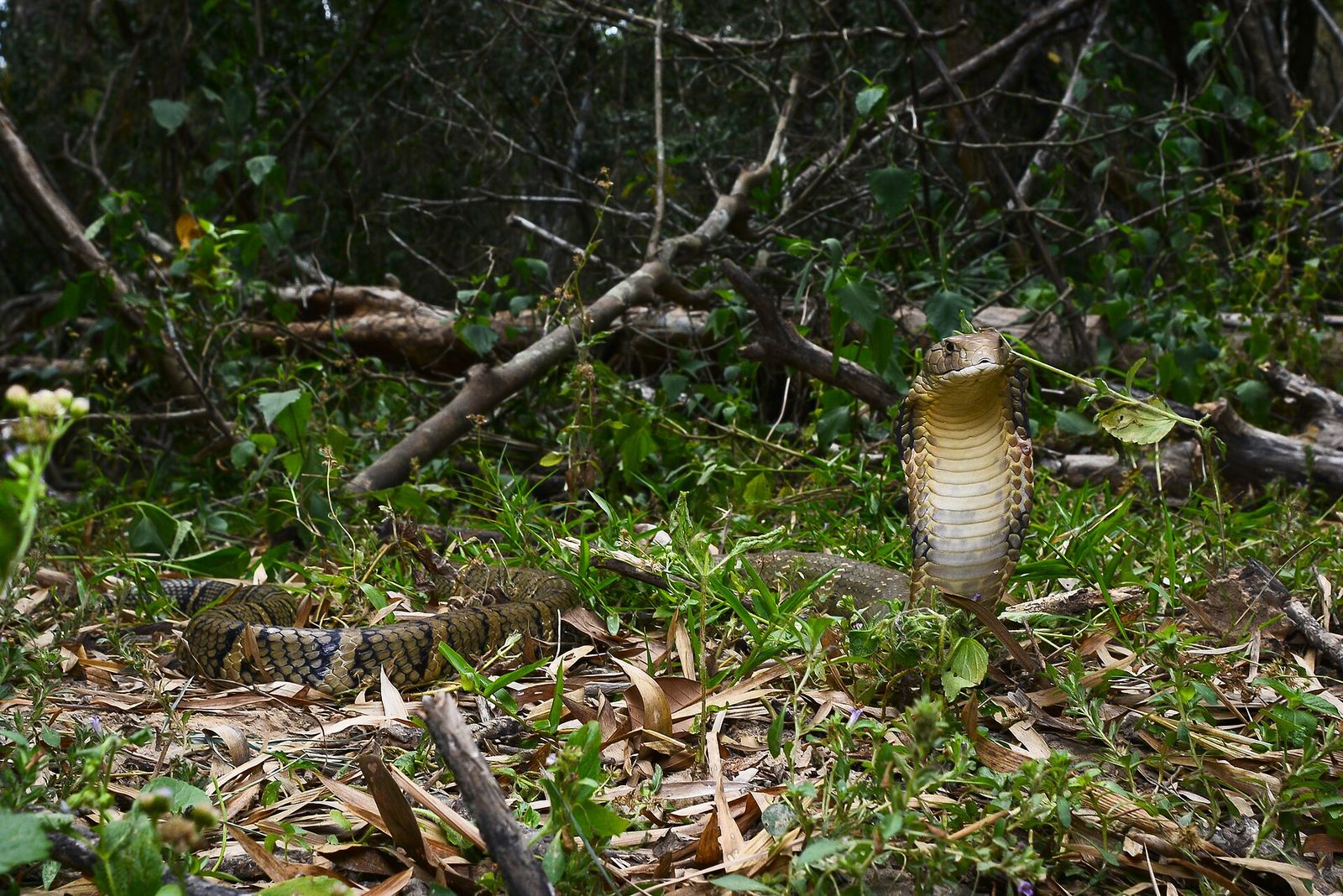
On 30 June 2017, Herpetology Notes, the open-access journal I have edited since 2016, published a short note with an exciting claim. It reported the first confirmed king cobra from the Azad Jammu and Kashmir territory of Pakistan. The evidence was a single photograph of a king cobra at the edge of a road, a satellite map with a pin, and a date and time: 15 May 2017, 11:10 in the morning. A reviewer and an associate editor had checked it. It looked simple.
Less than a month later, three readers wrote to me, each independently. All three were experienced specialists in Asian snakes, and all three said the same thing: they had seen that photo before, somewhere else.
A photo that came first
I opened an investigation. A reverse image search turned up the same picture on several websites. One of them, a Chinese news site, had posted it on 13 May 2017. That was two days before the authors said they had met the snake. When I asked the first author to explain, his reply made clear that the authors had not taken the photograph, and none of them could say where it came from. On 13 October 2017, 105 days after publication, we retracted the paper.
Then I made a mistake of my own. To contain the damage, we simply removed the article from our archive with no explanation. Copies were already on other websites, and the record lived on without its warning label. By 2025 it had been cited at least five times. One of those citations was in a major 2024 revision that split the king cobra into four species. That revision used the Pakistan record to help map where one of the four lives. In 2025 I put the paper back in its place in the journal, clearly marked as retracted, and published a full account of what had happened.
"The primary currency of science is trust, built upon a foundation of verifiable data and methodological rigor." — Kaiser 2025
A record like that is not just an embarrassment. Range maps guide ecological and conservation work, and once a false record gets into a species revision, it can keep misleading people long after the original paper is gone.
The krait that slipped through
Venomous snakes keep bringing me back to names, because this is where a naming mistake can cost the most.
In 2021 an Indian team published a fascinating study of kraits, night-active snakes whose bites kill many people in South Asia. The common krait, Bungarus caeruleus, is one of India's "Big Four" medically important snakes. The team found that kraits from different regions make very different venoms, even though the genes they switch on are much the same. That matters a great deal for whether antivenom works. It was an important finding for toxinology, the study of venoms and toxins.
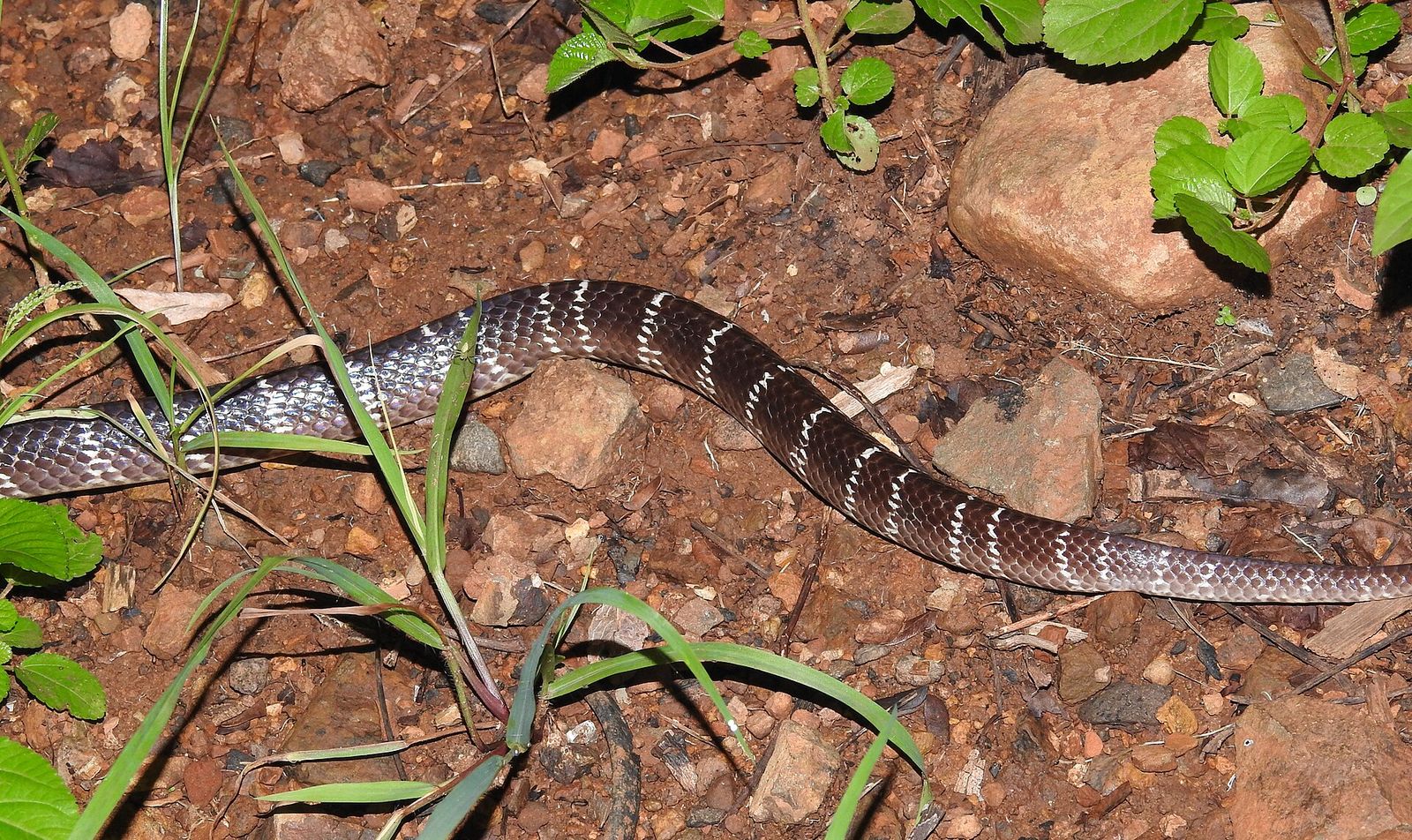
But the paper also named a new species, "Bungarus romulusi", after the famous Indian conservationist Romulus Whitaker. It was based on DNA from a single place near Bengaluru. The name did not follow the rules of the International Code of Zoological Nomenclature, the rulebook for animal names known simply as "the Code", so it was not validly published. There were deeper problems too. Every species name is tied to a type locality, the place its name-bearing specimen came from. For the common krait that is Visakhapatnam, on India's east coast. The study had no kraits from there. So there was no way to tell whether the old name caeruleus belonged to the northern kraits or to the "new" southern ones. Three even older names were also waiting in the wings. And the holotype, the specimen meant to anchor the name, was only a tissue sample, not a whole animal.
Wolfgang Wüster and I wrote up the lessons in 2023 under the title Bungled Bungarus. Our main point was not about the authors. It was about the journal. Toxins is a venom journal, and taxonomy, the science of describing and naming species, is outside its stated scope. The naming problems went unnoticed in review. Our advice to specialist journals was blunt: stay in your lane, tell authors not to add species descriptions, and when a manuscript strays outside your expertise, find reviewers who know that field. The journal declined an earlier version of our comment because it criticised the review process. The krait paper's lead author, Kartik Sunagar, on the other hand, accepted our conclusions graciously and commented helpfully on our draft.
Neil Armstrong, Burt Lancaster and Bob Hawke
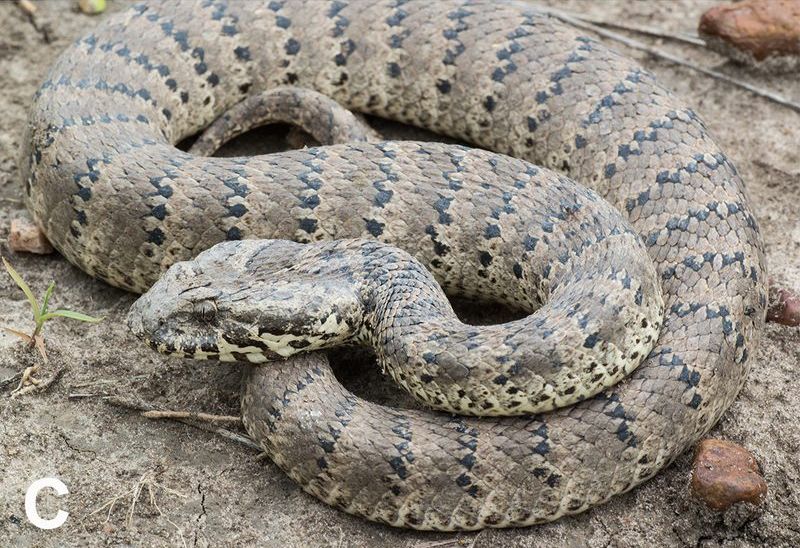
Australia's death adders are thick-bodied, ambush-hunting snakes that look like vipers. In 1985 Richard Wells and Ross Wellington named four new species of them in their self-published journal. They named one each for Neil Armstrong and for the actor Burt Lancaster. A third was for Prime Minister Bob Hawke, "in recognition of his part in saving the Tasmanian Wilderness". The fourth was A. schistos. None of the four descriptions described the actual type specimens. Most just pointed readers to other people's books and photographs.
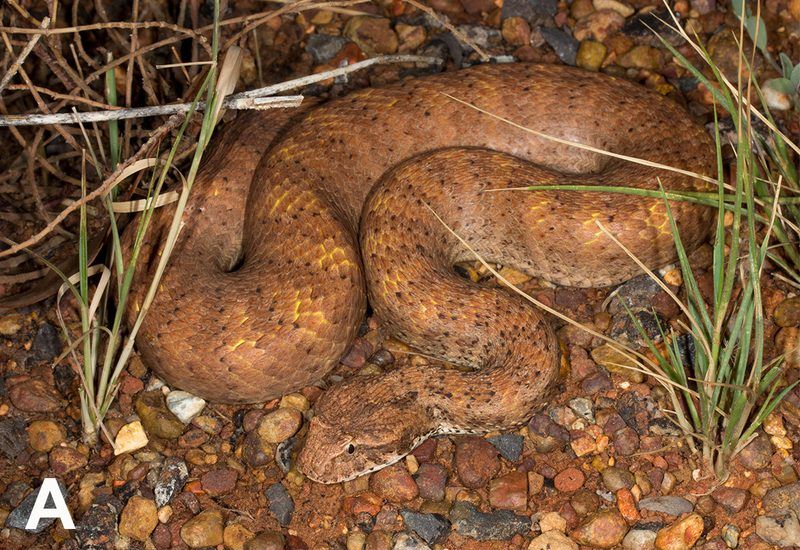
That mattered when scientists showed in 2015 that death adders in Western Australia's Kimberley region really are a separate species, and named it Acanthophis cryptamydros. Soon after, Wellington argued that his old name lancasteri should take priority. The result was two names in use for one venomous snake. Field guides and the national faunal directory used one. The Reptile Database, the IUCN and the World Health Organization's antivenom guidelines used the other.
In 2021, with Ryan Ellis, Simon Maddock, Paul Doughty and Wolfgang Wüster, I went through all four names line by line. Three were "naked names" with no real description, so they had never officially existed. Only hawkei, the Barkly Tableland death adder, survived. It survived because of one sentence comparing its babies with a relative's: juveniles "distinctly yellowish orange with grey and black flecking". One sentence was the whole difference between a valid species name and nothing.
The rule that decided this case, that the description must "accompany" the name, had just been confirmed in 2020 by the International Commission on Zoological Nomenclature, the body that rules on disputed names. It rejected the lizard name Caucasilacerta, whose description sat about 100 lines away from the name. In fairness, I had argued the other side of that case in 2016. The Commission disagreed with me, and a year later I was building on its ruling.
One faded snake
My last example is small and brown and lives underground. The worm-eating snakes of the genus Toxicocalamus are small, secretive burrowing relatives of the cobras from New Guinea. Mark O'Shea and I have worked on them for years. In 2015 we described T. ernstmayri from a single specimen, because it was so different from every other species that one animal was enough.
In 2022 Fred Kraus, Mark and I finished a review of a confusing group of these snakes. We examined 224 specimens and recognised nine species. Around the same time, another team named a new species, T. longhagen, from a single adult male. It had been bleached by years of light and preservative until its colour pattern, the key to telling these snakes apart, could not be read. When two of its authors sent Fred a draft to review, he wrote back. He pointed out that seven more specimens were in a university collection, and that key features they used to diagnose the species were problematic in the bleached specimen. As we later noted, that collection lies about 3 kilometres from one author's office. The description went ahead on the single specimen anyway.
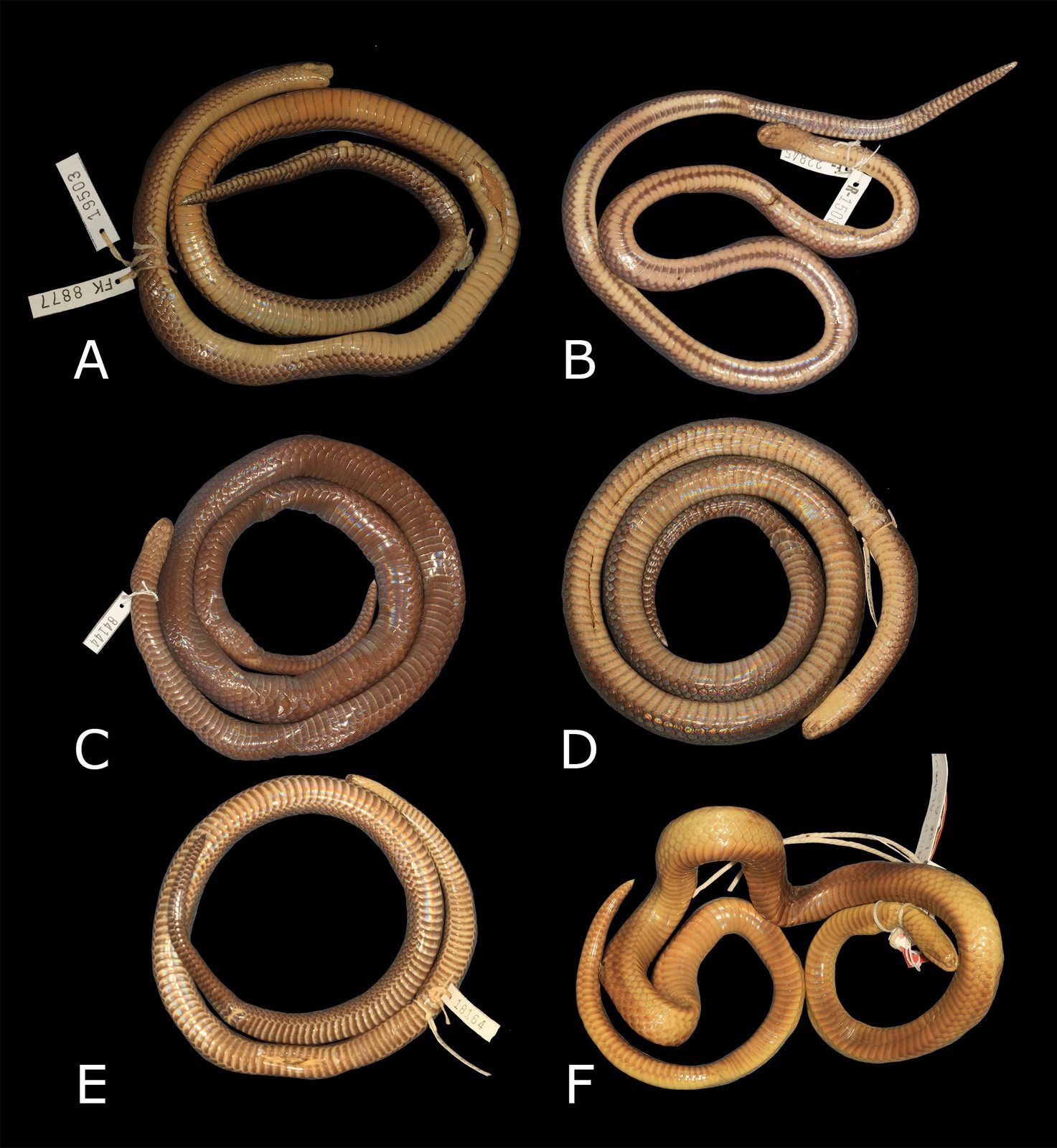
In 2023 we showed that the specimen cannot be told apart from the species already known. Toxicocalamus longhagen is a nomen dubium, a name of doubtful use, until someone finds new evidence.
What ties them together
A borrowed photo, a name in the wrong journal, a description that points at someone else's book, a single faded specimen. None of these is dramatic on its own. But each one attaches confusion to an animal that can kill people, or to a species that needs protecting. Get the name wrong on a range map, a CITES list (the treaty that controls the international wildlife trade) or an antivenom label, and the mistake does not stay on paper. The cure is always the same: real specimens, the old names checked, the right reviewers, and the patience to wait for the evidence.
The papers
- (2016) Darevskia and Iberolacerta (Reptilia, Lacertidae): Arribas, 1997 or 1999? The correct dating of two nomenclatural acts affecting Palearctic lizards, and validation of the name Caucasilacerta Harris, Arnold & Thomas, 1998 Bionomina 10(1): 61–73
- (2021) An evaluation of the nomina for death adders (Acanthophis Daudin, 1803) proposed by Wells & Wellington (1985), and confirmation of A. cryptamydros Maddock et al., 2015 as the valid name for the Kimberley death adder Zootaxa 4995(1): 161–172
- (2023) Bungled Bungarus: lessons from a venomous snake complex illustrate why taxonomic decisions belong in taxonomy-competent journals Zootaxa 5297(1): 139–143
- (2023) Why Toxicocalamus longhagen Roberts, Iova & Austin, 2022 (Serpentes, Elapidae) is a taxonomic nomen dubium Bionomina 32: 41–51
- (2025) Comments on the retraction of an article by Faiz et al. (2017) on the putative occurrence of a King Cobra, Ophiophagus hannah (Cantor, 1836), in Pakistan Herpetology Notes 18: 1043–1046