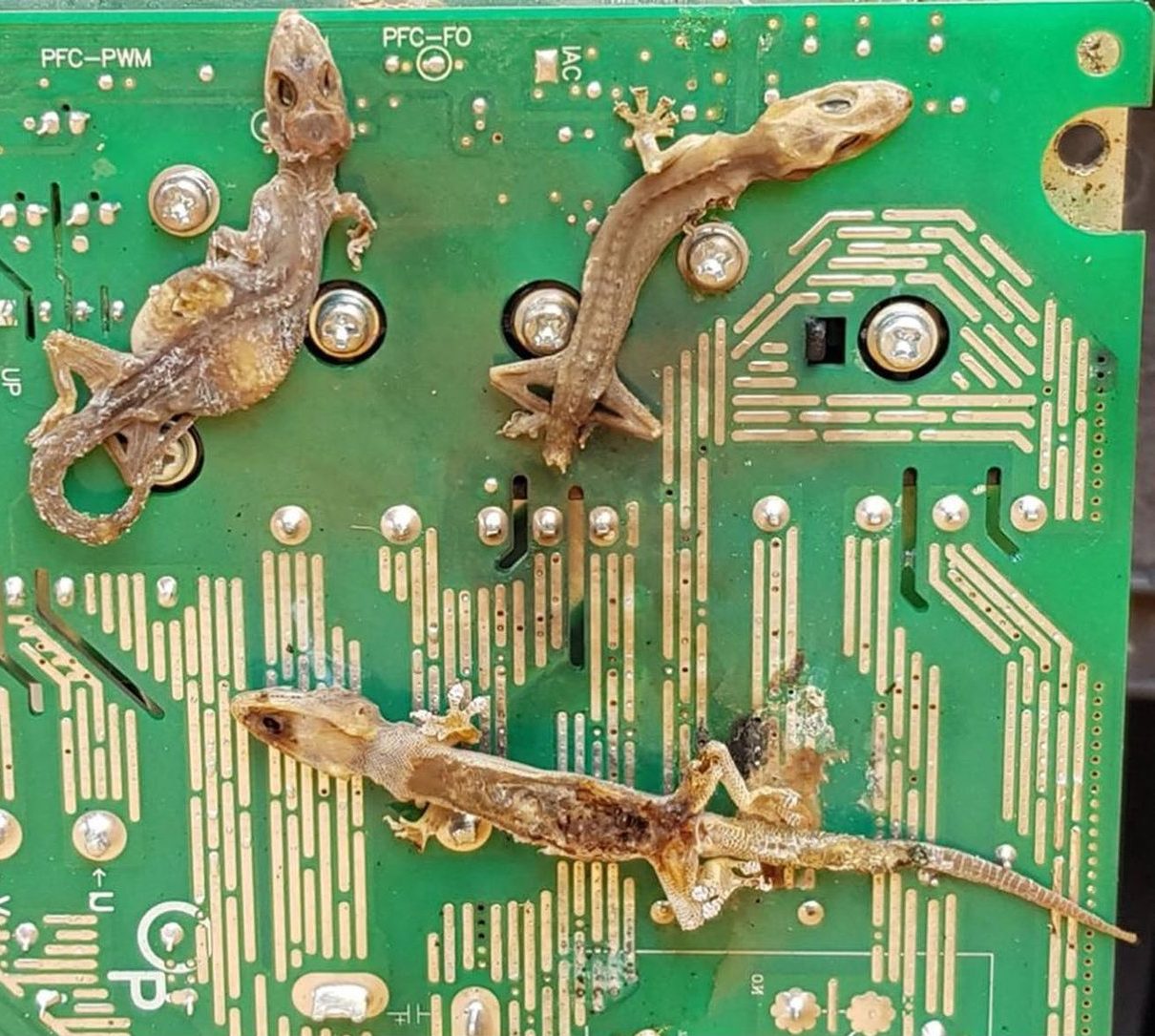
Massacre on the Motherboard
Photo: Kraig and Elizabeth Church, from Kaiser & Zdunek 2026, Discover Life
On 28 March 2020, an air conditioner stopped cooling in a beachfront house on Saipan, in the Northern Mariana Islands of the western Pacific. The system had been sitting idle for a few weeks. Air still blew into the house, but it was warm air. When a technician took apart the outdoor compressor, he found the cause. A single house gecko had been fried onto the unit's motherboard, the main circuit board. He replaced the board, the unit worked again, and he said he had never seen anything like it. A freak accident, he assumed.
Less than three months later, on 22 June, three of the house's four units failed at once, including the one that had just been fixed. Inside, all three motherboards had dead geckos stuck to them, three on one and two on each of the others. Two of them were females carrying eggs. The homeowners, Kraig and Elizabeth Church, photographed the scene and passed the pictures on to me. To me it looked like a massacre on the motherboard, and Przemysław Zdunek and I set out to find out how often this happens.
Why geckos love electronics
The victim was the Common House Gecko, Hemidactylus frenatus. It is a small, pale lizard that has hitched rides with people across much of the tropics. Rare is the building in tropical Asia and the Pacific that doesn't have one. Most people like them because they eat insects around porch lights at night.
But geckos are cold-blooded. They warm up by finding warm places. A circuit board left on standby sits slightly above air temperature. It is also sheltered and dark, with no predators around, which makes it a perfect hideout. The only problem is the electricity. The gecko doesn't chew anything. Its body simply bridges two contacts that should never touch, and the resulting short circuit kills both gecko and board. (One government website in Australia claims house geckos "chew electrical wiring." They don't. The damage is real, but the cause is a body in the wrong place, not teeth.)
When we searched the published literature, we found we were far from the first to notice.
- In Cuba, researchers documented 68 cases of gecko damage to televisions, air conditioners and computers. In electrical meter rooms they counted up to 5.63 geckos per cubic metre.
- In Taiwan, geckos caused repeated short circuits in air conditioners, at an average repair cost of about US$170 each time.
- In Australia, two geckos fell across the wiring of a 415-volt switchboard and blew hot gas and copper at two tradesmen. Fortunately, no one was seriously hurt.
- Also in Queensland, at least one homeowner won a case against a manufacturer that refused to pay for gecko damage under the warranty. The company argued geckos were "vermin." The tribunal ruled for the homeowner.
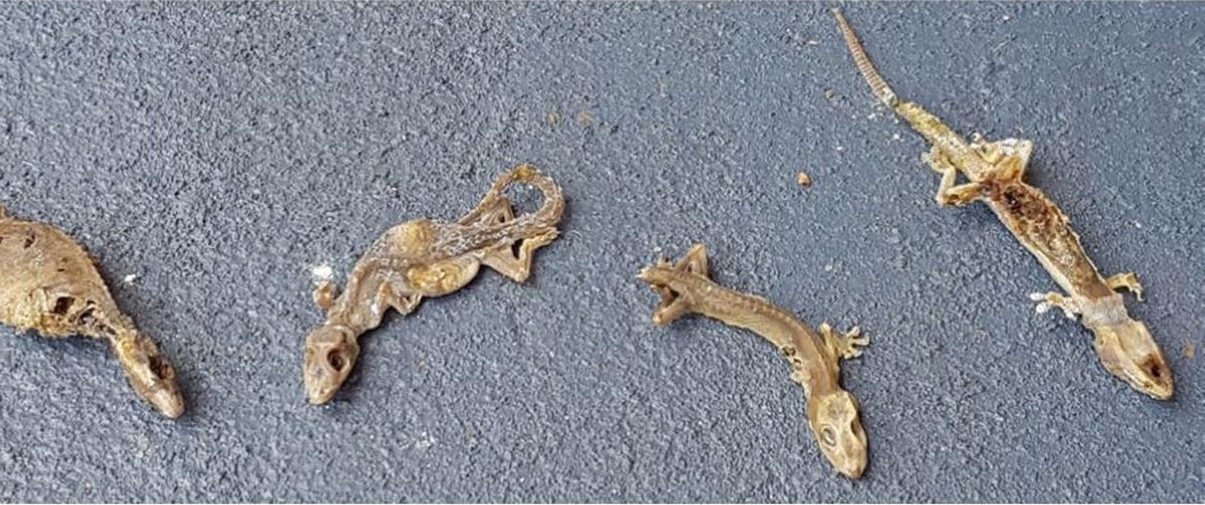
One thing none of the earlier reports mentioned was the sex of the dead geckos. Ours included two egg-carrying females. That makes me wonder whether a warm circuit board is especially tempting to a female about to lay eggs, since warmth helps eggs develop. It is a question someone could answer by rehydrating mummified geckos and dissecting them.
The practical advice is simple. Unplug units you are not using, and screen the vents and drain holes so geckos can't get inside. The bigger point is that when we move animals around the world, their effects don't stay in nature. They follow us into our wiring.
A gecko falls from the sky
Much of what I love about fieldwork is the scenes you never plan for. Some of them become their own short papers, called "natural history notes."
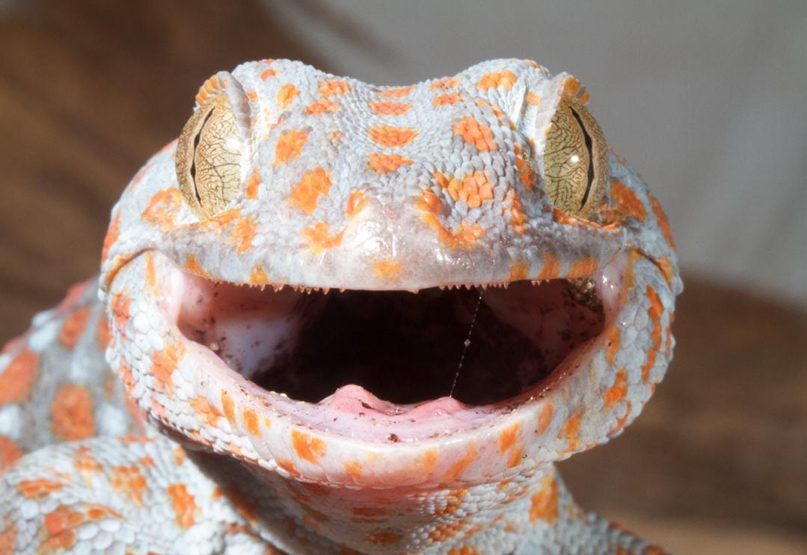
On 31 January 2010, during our first reptile survey of Ataúro Island, off the coast of Timor-Leste, eight of us were walking down the island's main road at 7:30 in the evening. Tokay geckos, Gekko gecko, were calling from the trees all around. These are big, loud, famously bad-tempered geckos. Above us, in a grove whose branches met over the road, we heard a short, noisy squabble, less than a minute long. Then a tokay landed on the road at our feet.
It was dead. Mark O'Shea and I shone our flashlights up into the branches, about six metres overhead, and saw a particularly large tokay retreating along the branch. The dead gecko, a male, had bloody tooth marks on both sides of its ribcage that matched a tokay's bite. We had heard aggressive "barks" and nothing else. Everyone who keeps tokays knows that two males will fight, but nobody had formally documented that aggression in the wild, let alone a fight to the death. Mark and I titled our paper "Skyfall." Like the James Bond film, it involved plenty of male aggression, and our subject literally fell from the sky.
Frog eat frog
On the morning of 11 July 2015, on a nature walk near Playa Larga, on Cuba's Zapata peninsula, we came across a bush full of tiny Cuban Treefrog froglets, Osteopilus septentrionalis, each about 15 millimetres long. An adult frog about three times that length was sitting one leaf away. I started photographing. The adult turned toward one of the froglets. The froglet jumped onto a set of thin, wobbly branches, and its struggle to keep its balance gave its position away. The adult leapt, grabbed it by the head, and swallowed it in two gulps. My last picture shows the adult sitting among the fallen twigs with a visibly fuller belly.
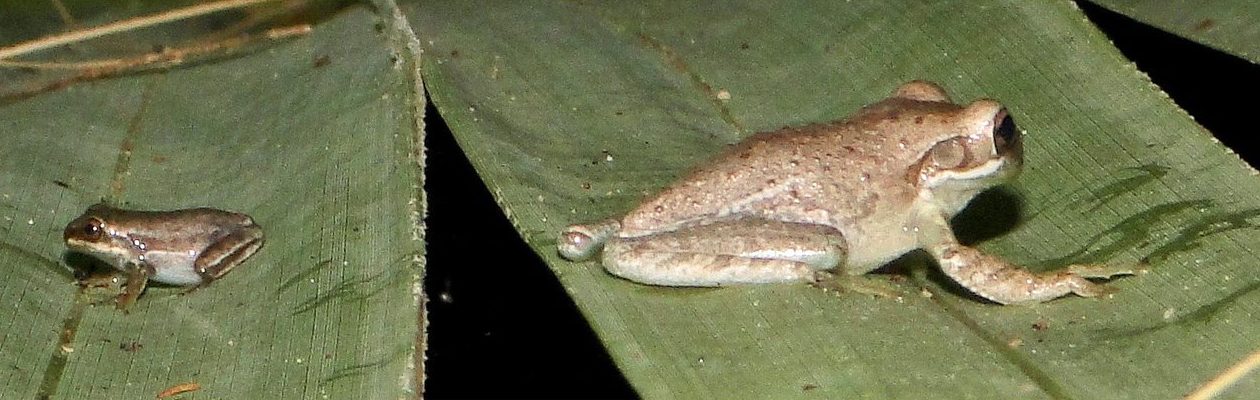
Cuban treefrogs are well studied in Florida, where they are an invasive pest. But this was the first direct record of cannibalism in their native home, Cuba. Colleagues added more. In one case a female had more than half of a bright-yellow breeding male in her mouth before he wriggled free seven minutes later.
Folded in half
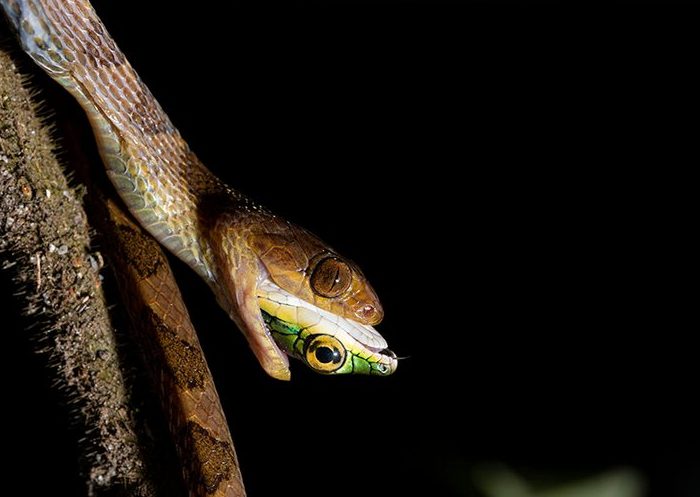
Snakes that eat other snakes usually start at the head. In August 2023, in a Chocó rainforest reserve in western Ecuador, my colleagues, including Amanda Quezada, who took the photographs, watched an Ornate Cat-eyed Snake, Leptodeira ornata, hold a young Chocoan Parrot Snake by the middle of its body for half an hour, waiting for its venom to work. The parrot snake bit back repeatedly. When it finally went limp, the cat-eyed snake didn't let go and start again at the head. It just began swallowing where it was, folding its prey in half. The parrot snake's head was the last part to disappear, about an hour later. Our review of all known cases showed that cat-eyed snakes will eat snakes head-first, tail-first, or, as here, from the middle.
Toil in the soil
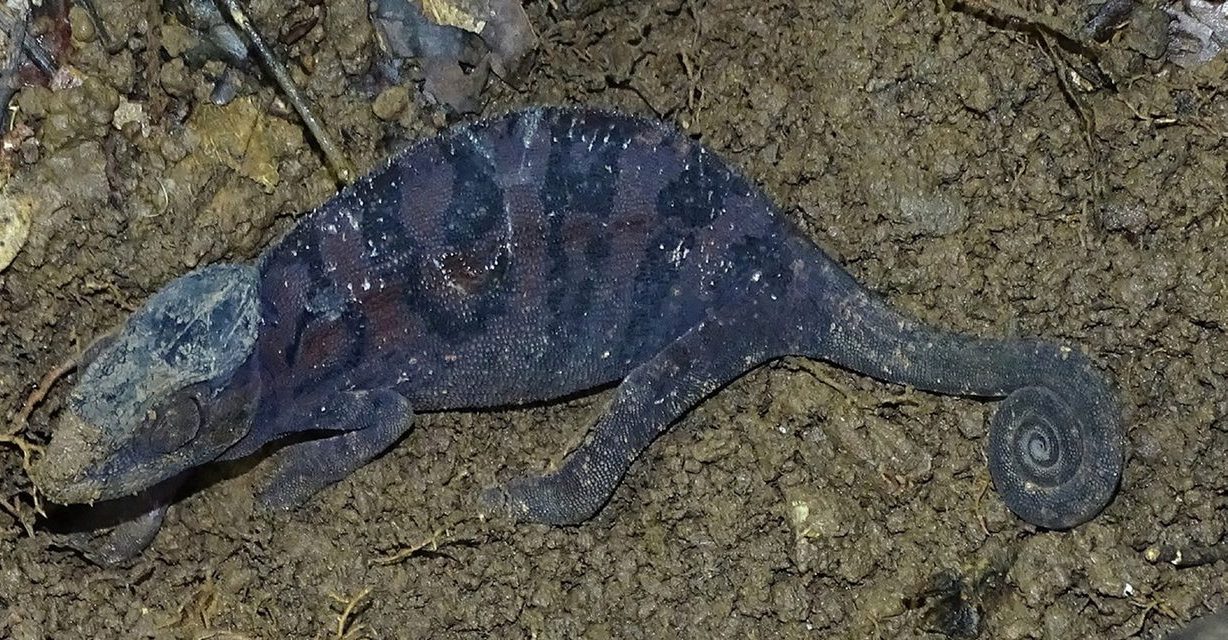
My last scene is a quiet one. On 3 February 2020, during a Victor Valley College student trip to Nosy Komba, a small island off northwestern Madagascar, we came upon a deep blue-violet female Panther Chameleon, Furcifer pardalis, digging a hole in the forest floor. Chameleons rarely come down from the trees, and they don't dig to find food or to escape, so a digging chameleon is most likely making a nest. Her size and colour matched those of a female about to lay. Every earlier report we could find had these chameleons nesting in sandy soil. She was digging into dark, wet, sticky clay, pushing in with her mud-covered snout and scraping with her left front foot while her left hind foot shoved the dirt behind her. We watched for only about five minutes, so as not to disturb her. We never saw whether she laid eggs, but no one had recorded a Panther Chameleon digging in soil like this before.
Most of nature's surprises are ordinary animals doing ordinary things, where nobody happens to be watching.
That, for me, is the value of these small notes. None of them is a grand experiment. Each is one observation, carefully written down. Together they fill in how animals actually live. Sometimes, as with the geckos on Saipan, they also tell us something useful about how we live alongside them.
The papers
- (2016) Cannibalism in Cuba: first direct observations of Cuban treefrogs (Osteopilus septentrionalis, Hylidae) feeding on conspecifics in their native habitat, with a brief review of anurophagy and cannibalism in treefrogs Reptiles & Amphibians 23(1): 21–27
- (2020) Skyfall: an extreme case of male-male aggression in Tokay Geckos (Gekkonidae: Gekko gecko) on Ataúro Island, Timor-Leste Herpetology Notes 13: 969–971
- (2024) Review of ophiophagy in neotropical cat-eyed snakes, genus Leptodeira, with the first report of ophiophagy in L. ornata (Bocourt, 1884) Herpetology Notes 17: 347–349
- (2026) Air conditioning units as death traps for introduced Common House Geckos, Hemidactylus frenatus Duméril & Bibron, 1836, on Saipan, Commonwealth of the Northern Mariana Islands, with a discussion of impacts Discover Life 56: 38
- (2026) Toil in the soil: putative nest excavation by an adult female Panther Chameleon Furcifer pardalis (Cuvier, 1829) in moist, clayey soil on Nosy Komba, Madagascar Journal of Threatened Taxa 18(9): 29784–29786