A Snake in Müller's Handwriting
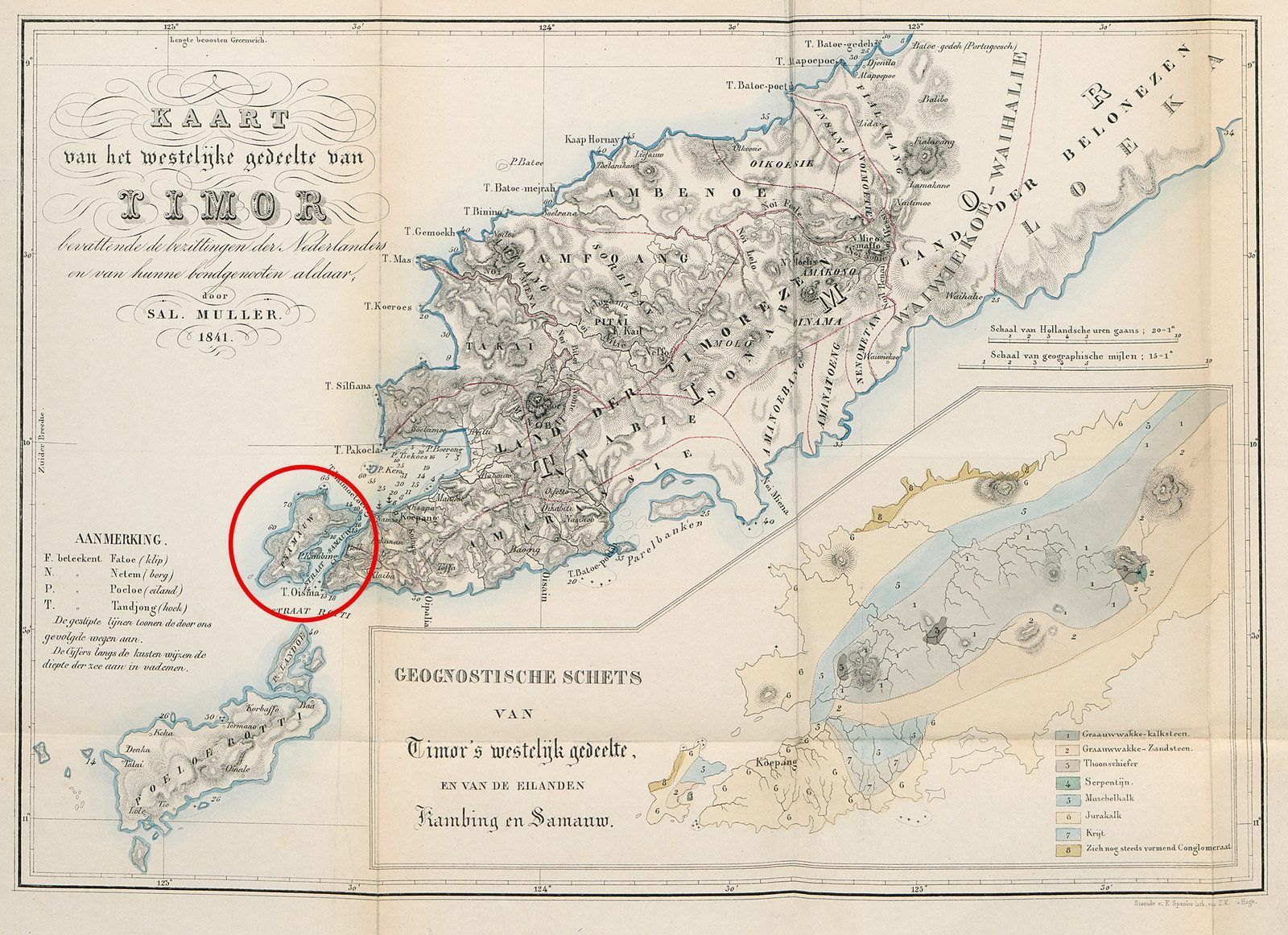
Map: Salomon Müller, 1841, from Kaiser et al. 2021, Zootaxa
In April 1829, on a small island off the western tip of Timor, a German naturalist in his mid-twenties wrote a careful description of a snake. At the top right of the page he noted the place and date: "Samao April 1829." At the top left he gave the animal a name: Coluber lividus Müller.
The naturalist was Salomon Müller. He never published that page. It took almost two hundred years, and a lot of help from museums in three countries, for his snake to get its full story told. My wife, Christine Kaiser, and I, with our friends Mark O'Shea and Sven Mecke, ended up being the ones to tell it.
A deadly expedition
Müller was a member of the Natuurkundige Commissie, the Natural History Commission for the Dutch East Indies. For three decades from 1820 it sent scientists, artists and preparators across what is now Indonesia. It was a dangerous job. Heinrich Kuhl died of hepatitis in 1821, Johan van Hasselt of an amoebic infection in 1823, and Heinrich Boie of malaria in 1827.
On 14 October 1828 the survivors stepped off the corvette Triton in Kupang, on Timor. From there Müller, Heinrich Macklot and the artist Pieter van Oort explored the interior and the offshore islands of Semau and Kambing. In the Leiden museum's old ledger, their specimens are often listed simply as "MM", for Macklot and Müller. Only one of the two made it home. Macklot was killed during an uprising on Java in 1832, and Van Oort died of malaria on Sumatra in 1834. Müller returned to the Netherlands in 1837. Curiously, no portrait of him is known to exist.
Müller was a far better collector than describer of species. He is remembered for the names of the tree kangaroos and the false gharial, and for early ideas about the geography of animals that influenced Alfred Russel Wallace. His snake from Semau, however, was left for others to name.
The name that crossed to Paris
In 1835 Hermann Schlegel of the Leiden museum spent three months in Paris working in the herpetology collection. He travelled by boat, which let him bring along plenty of material, and we believe it included Müller's snakes from Semau and his handwritten notes. In 1854 the Paris zoologists André Duméril, Gabriel Bibron and Auguste Duméril published the species as Lycodon lividum, the "lead-coloured" snake, and credited the name to "Salom. Müller. Manuscrit."
Under the rules of zoological naming, a name belongs to whoever first publishes it with a description. Unless the publishers quote the manuscript directly, a courteous nod is not enough. In our 2018 monograph, a book-length study of these snakes, we had credited the name to Müller. Once we saw his actual text and compared it with the 1854 description, we had to correct ourselves: the species is Stegonotus lividus (Duméril et al., 1854).
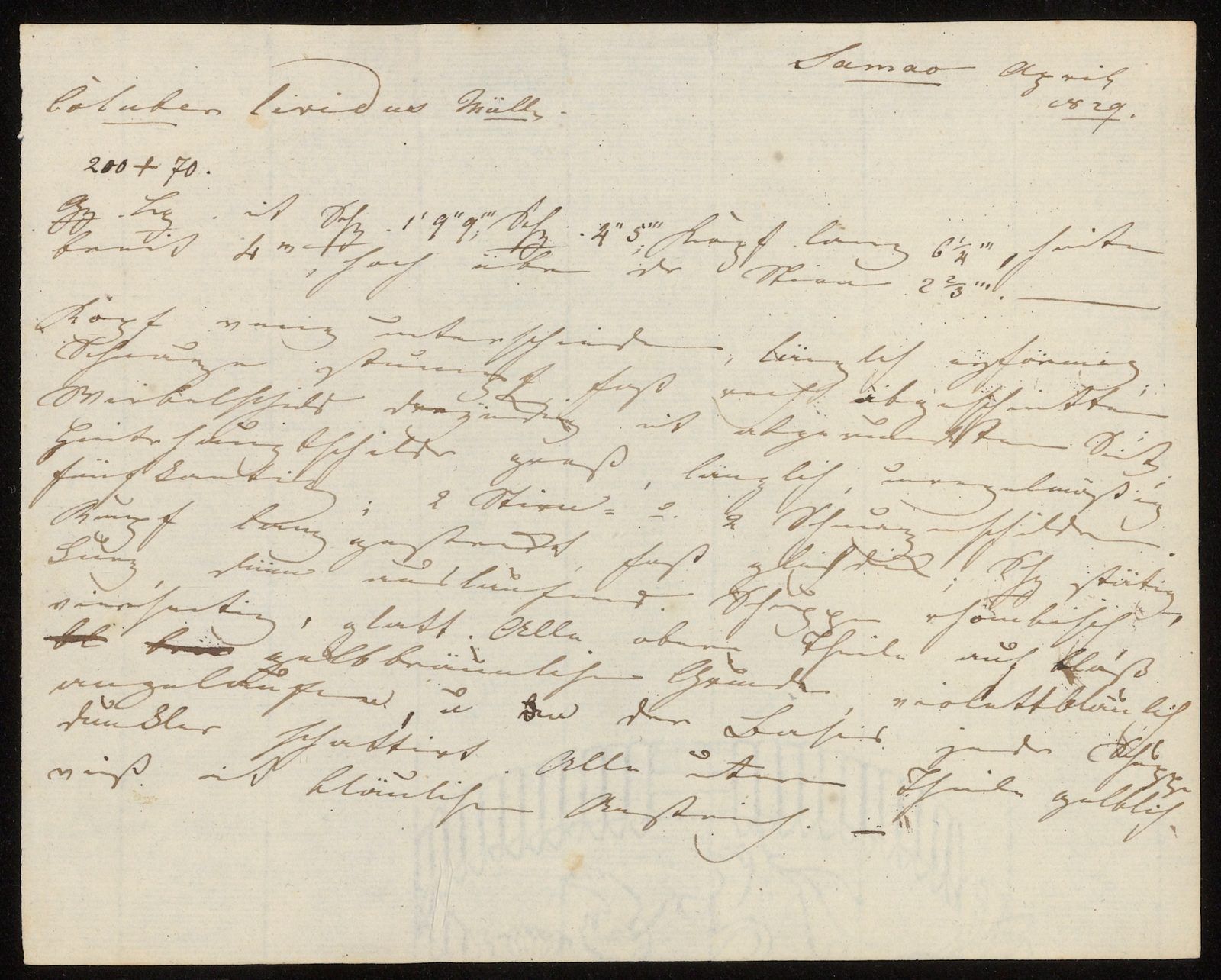
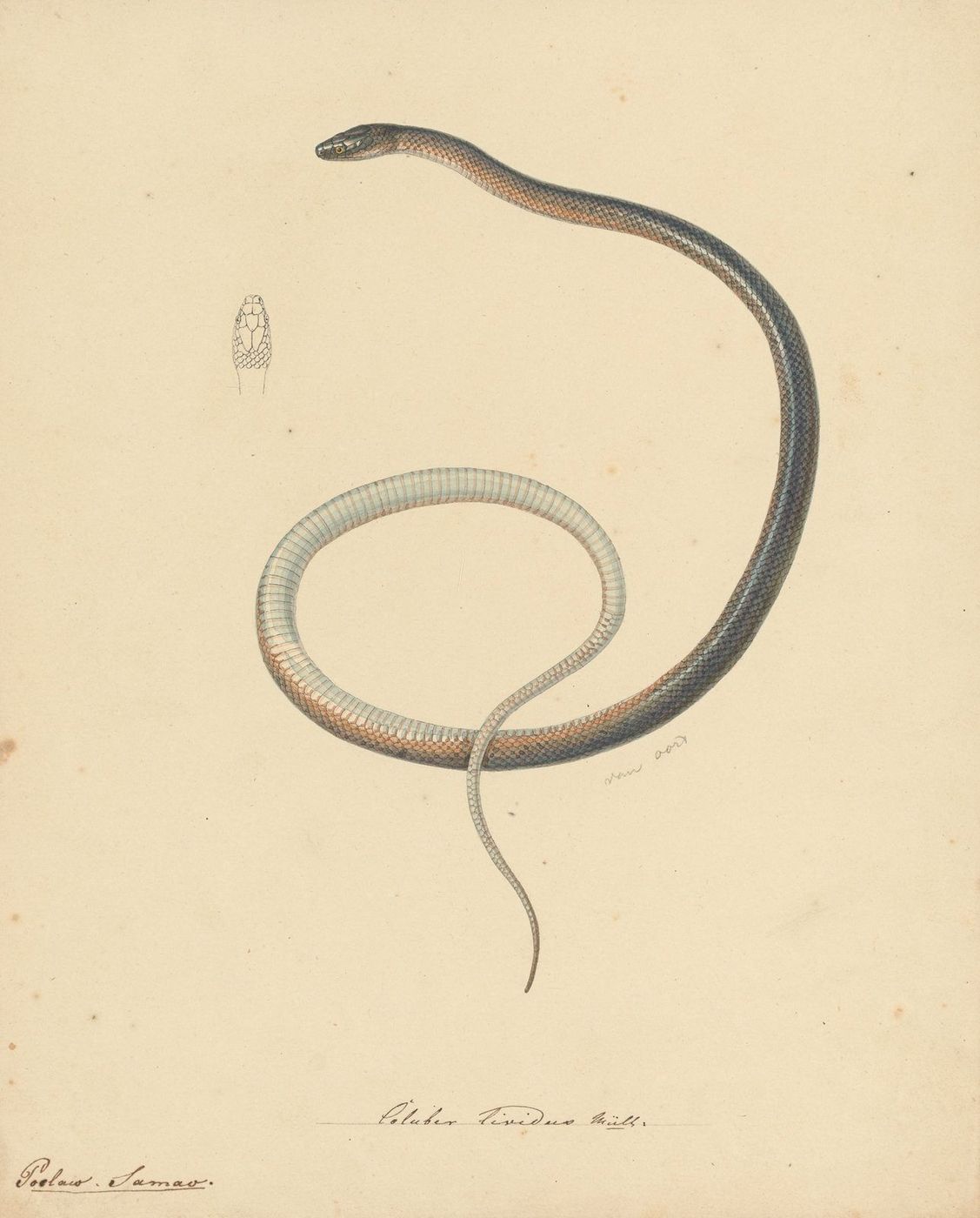
The manuscript turned up among unpublished papers from the Commission compiled by Gassó and colleagues in 2020. With it was a coloured drawing by Van Oort that almost certainly shows the very snake Müller described. Müller measured it in old French units of feet, inches and "lines". Converted, his measurements give a snake 589 mm long with a 120 mm tail, which closely matches one of the two snakes still in Leiden.
Groundsnakes and their tangled names
Müller's snake is one of the Indo-Papuan groundsnakes, genus Stegonotus. These are quiet, mostly nocturnal snakes of the islands between Borneo, the Philippines, New Guinea and Australia. They eat frogs, lizards and eggs, and they are not considered venomous, although enlarged rear teeth and vigorous chewing can make a bite bleed for a long time.
When Christine, Mark and I started to revise the group, we quickly found that its names were a mess. Species had been described in Dutch, English, French, German and Italian, often from specimens with vague or wrong localities. So we went back to the beginning. We examined over 1,500 museum specimens and traced the history of every original specimen we could find. The result, published in 2018, ran to 73 pages. Even our follow-up corrections held surprises: the London dealer listed as the collector of one Australian specimen had, we learned, never been to Australia.
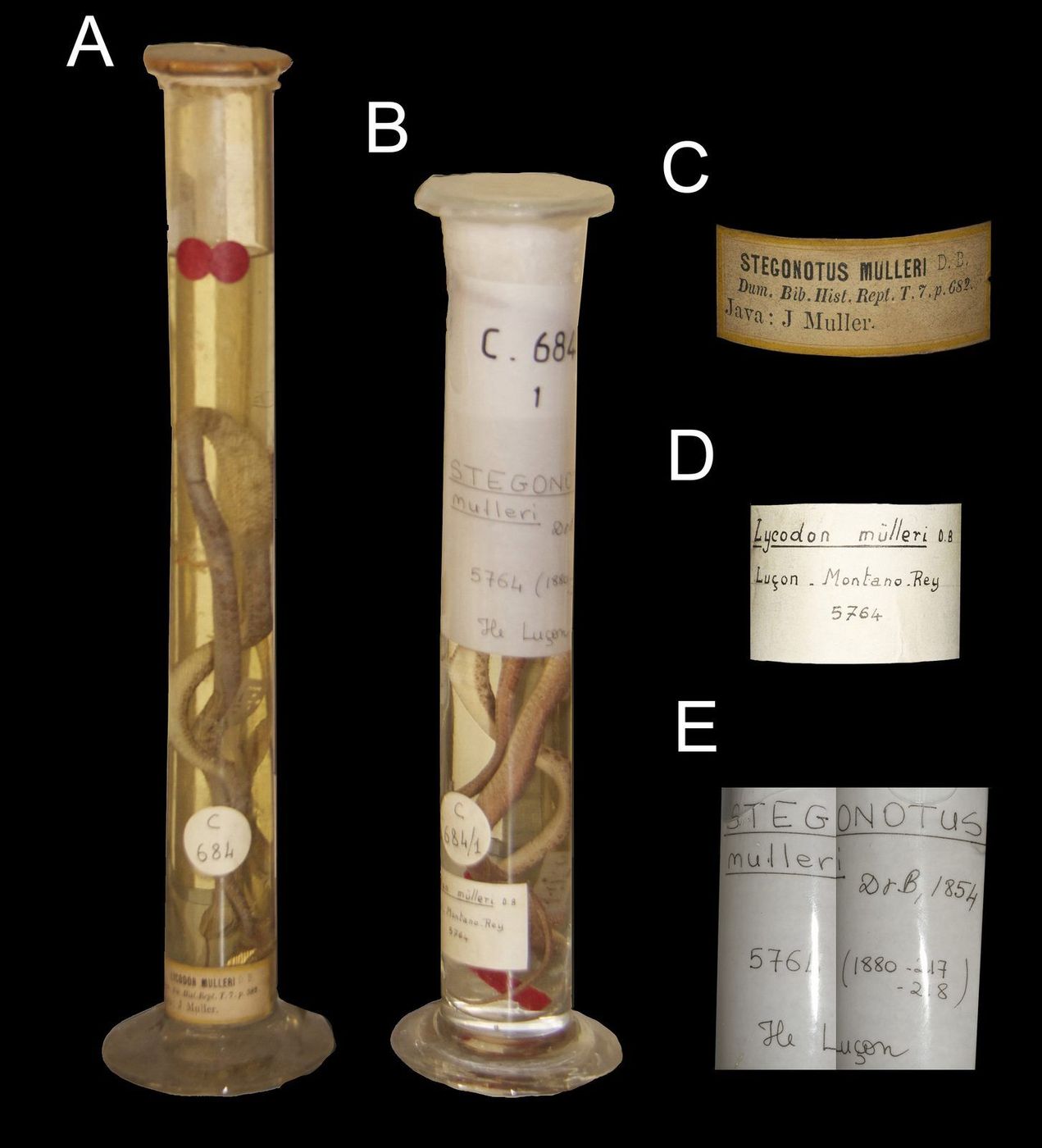
Some of what we found belongs in a detective novel. In Paris, the original specimens of two different snakes, both named muelleri and both labelled "Java", sit together in one tall glass jar. Neither species actually lives on Java; both come from the Philippines. The likeliest explanation is that shipments passing through Batavia (today's Jakarta) were labelled with the port rather than the place of capture.
A third snake from Semau
Even after 73 pages, we had missed something. The 1854 description gave measurements for a single snake that did not quite fit either of the Leiden specimens. Then we noticed a sentence we, and others before us, had passed over: the Paris collection had received "another" specimen from Leiden.
A query to Paris found it. It had been catalogued as "Stegonotus sp." from "Pulo Samas", a misspelling of Semau, which probably explains why earlier searches for a Lycodon from Semau had missed it. This snake, MNHN 3414, turned out to be the specimen actually measured in the original description, and the only male of the species known. Only three preserved Stegonotus lividus exist, and now we know where all three are.
"Only through the careful work of connecting type material with museum specimens and molecular data can the taxonomy and nomenclature of complex taxa be stabilized." — Kaiser et al. 2018
New snakes from old jars, and one from a log
Sorting out the old names made it possible to recognise new ones. A snake collected in February 1953 by the missionary Herbert Marcus and his wife Mieneke near the village of Kamro in West Papua had been identified in 1962 as a species from islands 500 km away. It was new, and we named it Stegonotus ayamaru, for the Ayamaru people and their efforts to protect their forests and lakes from exploitation.
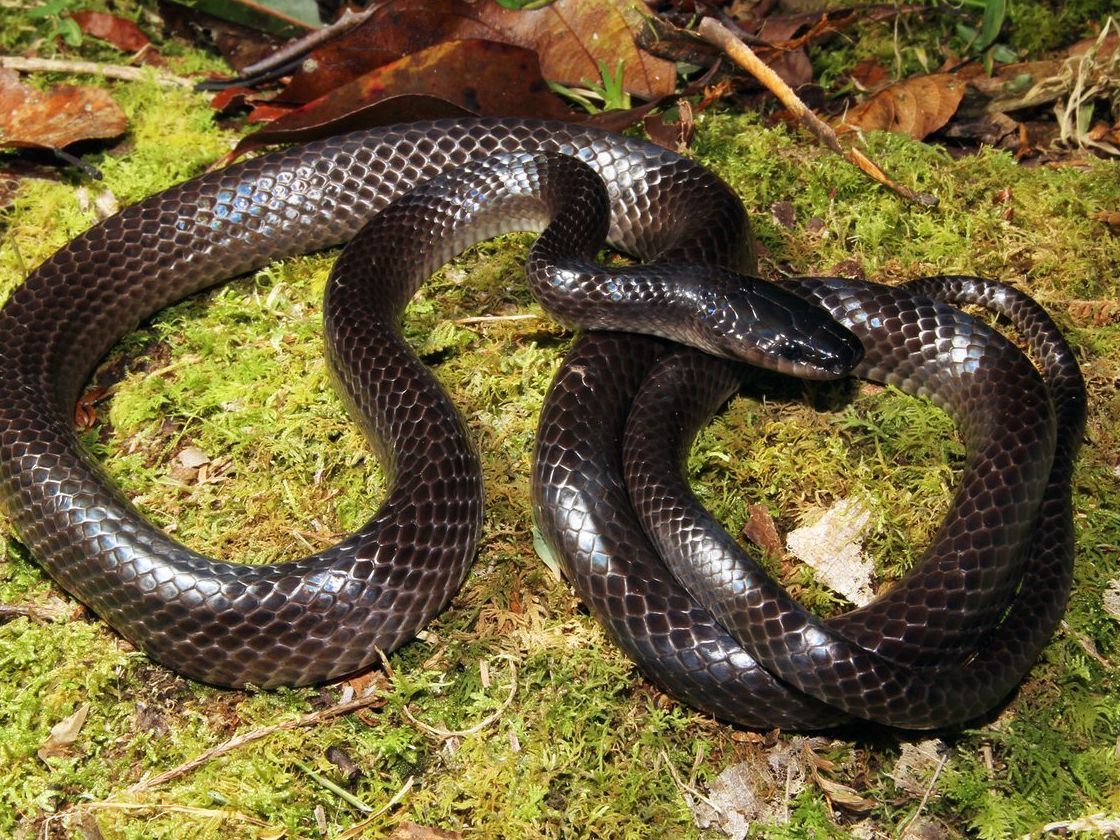
Three specimens from the mountains around Mount Kinabalu in Borneo, known since at least the 1880s, also proved to be new. We named them Stegonotus caligocephalus, the "dark-headed" groundsnake, a nod both to the snake's dark head and to the looming shape of Kinabalu itself. In several trips to Kinabalu we have never seen one alive.
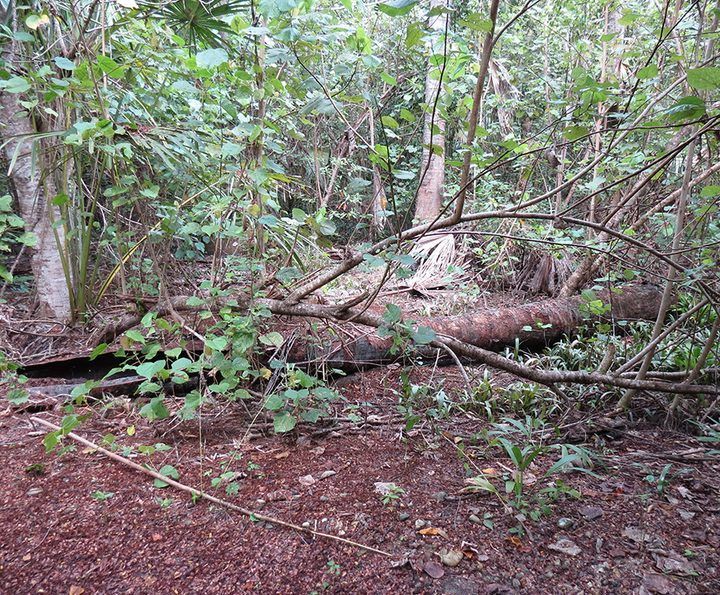
The last new species came from our own fieldwork. On 3 July 2012, in moist coastal forest on the south coast of Timor-Leste, Caitlin Sanchez spotted a brown snake moving across the forest floor. Sven Mecke and I chased it into a rotting tree, and Mark O'Shea pulled it out of the soft mulch inside by hand. Over several visits we found a few more, and every adult was active in daylight, which is unusual in a group known for coming out at dusk or night.
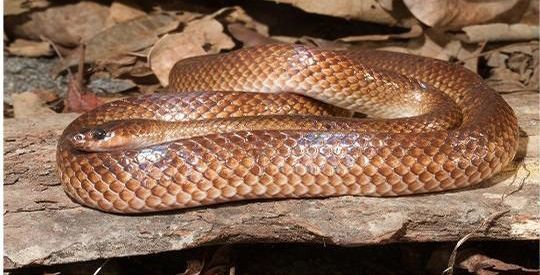
We named it Stegonotus nancuro, after the place called Nancuro. In Tetum, Timor-Leste's common language, the word describes a place where fish are caught with a round net. Efforts to protect the area as the Nancuro Nature Reserve were begun in 2011 by José Ramos-Horta, then the country's president, and we dedicated the paper to him on the 25th anniversary of his Nobel Peace Prize.
So the circle closed. A snake first described by hand on Semau in 1829, and a snake pulled from a Timorese log in 2012, turned out to be neighbours. Both halves of the story mattered. Without the old specimens and their paperwork, we could not have known which names were already taken. Without the new fieldwork, we would never have met the Timor groundsnake at all.
The papers
- (2018) The taxonomic history of Indo-Papuan groundsnakes, genus Stegonotus Duméril et al., 1854 (Serpentes, Colubridae), with some taxonomic revisions and the designation of a neotype for S. parvus (Meyer, 1874) Zootaxa 4512(1): 1–73
- (2019) Corrigenda and Addenda to the article “The taxonomic history of Indo-Papuan groundsnakes, genus Stegonotus Duméril et al., 1854 (Colubridae), with some taxonomic revisions and the designation of a neotype for S. parvus (Meyer, 1874)” by Kaiser et al. (2018) Zootaxa 4615(2): 392–394
- (2019) A new species of Indo-Papuan groundsnake, genus Stegonotus Duméril et al., 1854 (Serpentes, Colubridae), from the Bird’s Head Peninsula of West Papua, Indonesia, with comments on differentiating morphological characters Zootaxa 4590(2): 201–230
- (2020) Carefully examining Bornean Stegonotus (Serpentes, Colubridae): the montane groundsnake population in Sabah is a distinct species Zootaxa 4894(1): 53–68
- (2021) Three’s Company: discovery of a third syntype of Stegonotus lividus, a species of colubrid snake from Pulau Semau, Lesser Sunda Islands, Indonesia, with comments on an unpublished 19th Century manuscript by the naturalist Salomon Müller Zootaxa 5039(1): 56–70
- (2021) A new species of Stegonotus (Serpentes: Colubridae) from the remnant coastal forests of southern Timor-Leste Zootaxa 5027(4): 489–514